It’s called ‘the land of enchantment’ for a reason. At first glance, the high desert, barren landscape may seem a little dry and colorless but if you take the time to explore, you’ll find that this place is anything but dull. In fact, it’s a treasure trove of natural wonders that left us completely spellbound.
From the most unusual and otherworldly sights we’ve ever seen to the rich indigenous culture that permeates the state, adventurous lodging options and exquisite food – New Mexico truly has it all.
Day 1: Santa Fe
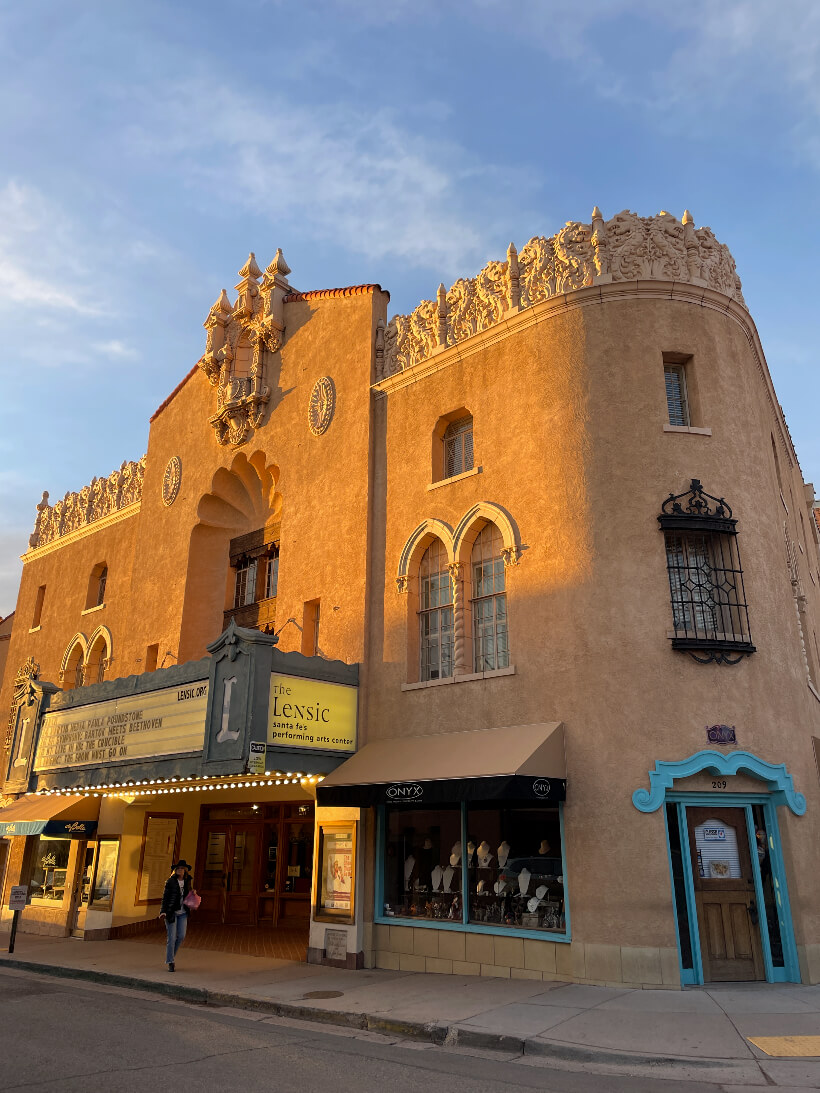
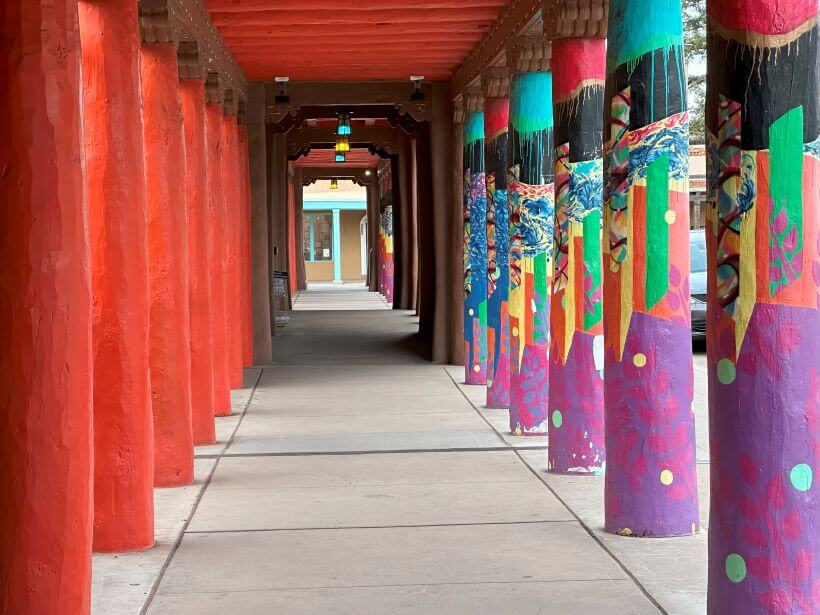
Santa Fe is one of the oldest inhabited cities in America, dating back to 1610, and as such, it has character and an old-world charm unlike your typical American city. One of the most striking features of Santa Fe is its unique architecture in the Pueblo Revival style. Inspired by Indigenous adobe dwellings, the buildings’ silhouettes flow with gentle curves and soft angles, in pretty dusty rose and terracotta hues, looking like sun-washed clay sculptures, slightly out of place on the streets.
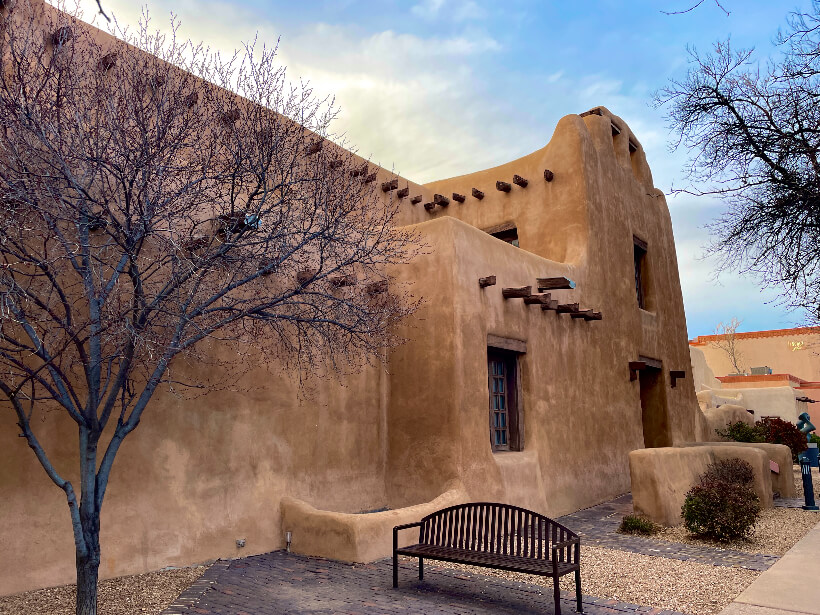
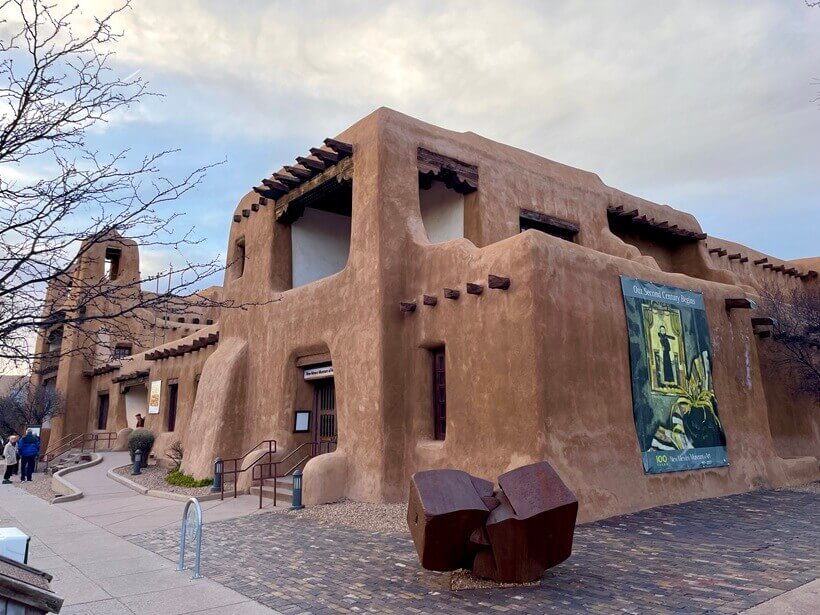
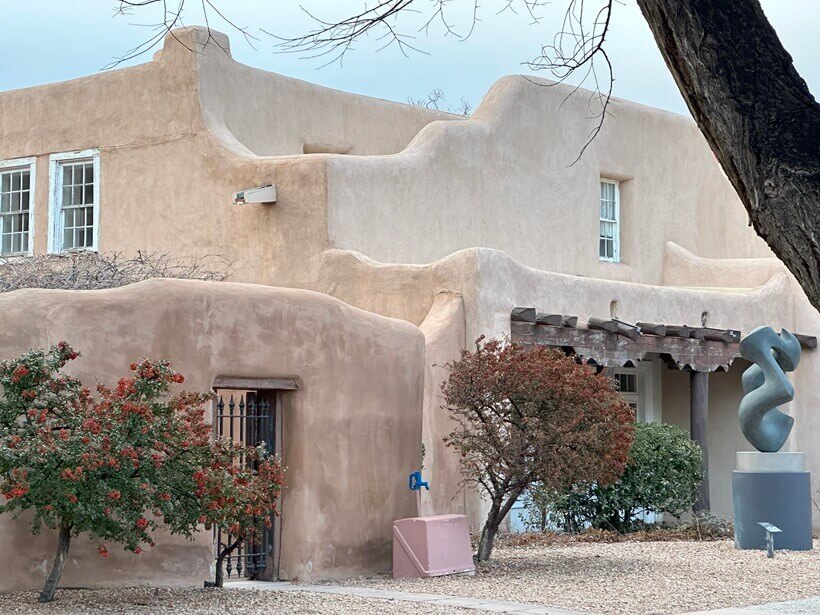
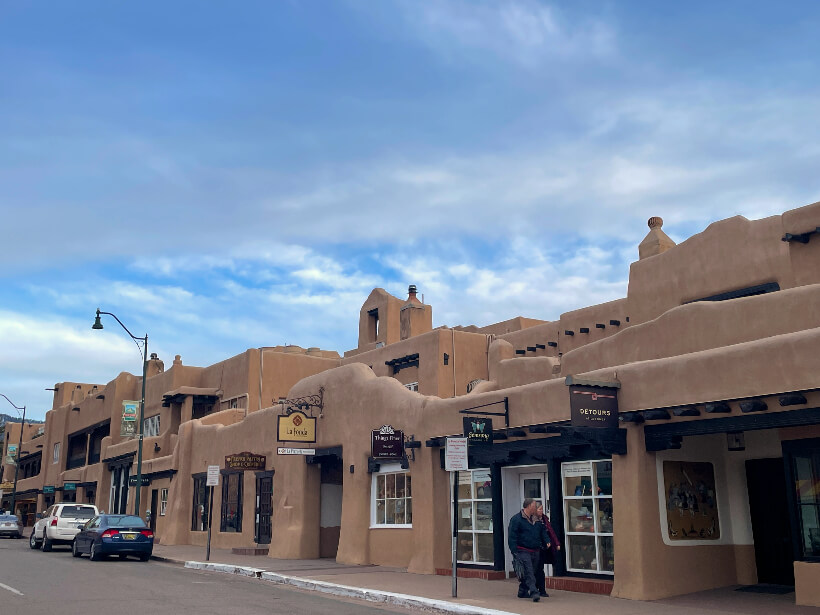
We arrived in the late afternoon and checked in at Hotel St. Francis in downtown. Over a century old, but recently renovated, this boutique hotel is one of the prettiest hotels we’ve stayed in. Redesigned in the old Spanish style, with a cozy wood burning fireplace in the center of its high-ceiling lobby, lit by a wrought-iron candle chandelier, and furnished with hand-crafted wood furniture, it creates a cozy vibe, reminiscent of a cross between a monastery and a spa.
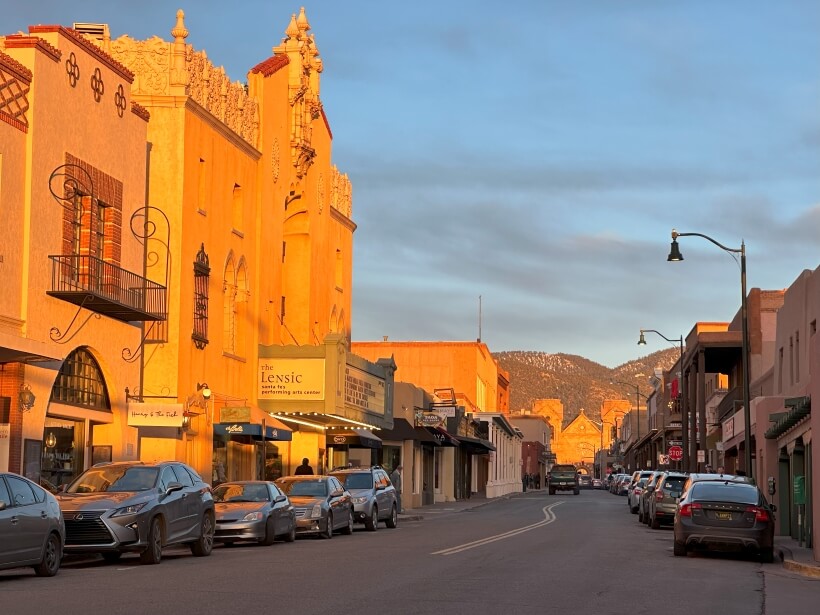
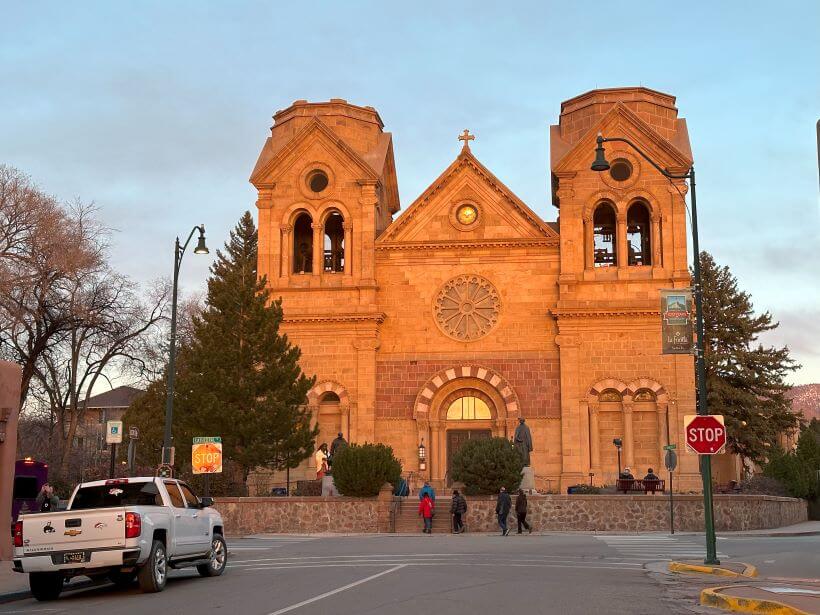
The hotel offers some great options to chill out and relax on its premises – at one end of the lobby we could hear the loud crowd chatter from the in-house Secreto Bar. At the opposite side of the lobby, they have a winery, where you can sample some local New Mexican wines. Alternatively, you may opt for some of the interesting choices at the Market Steer Steak House, also on the premises. But instead, we quickly dropped our luggage and went out to explore the streets of the old town. And just in time, as it was ‘golden hour’ and everything glowed in the vibrant rusty-orange light.
Day 2: Bandelier National Monument
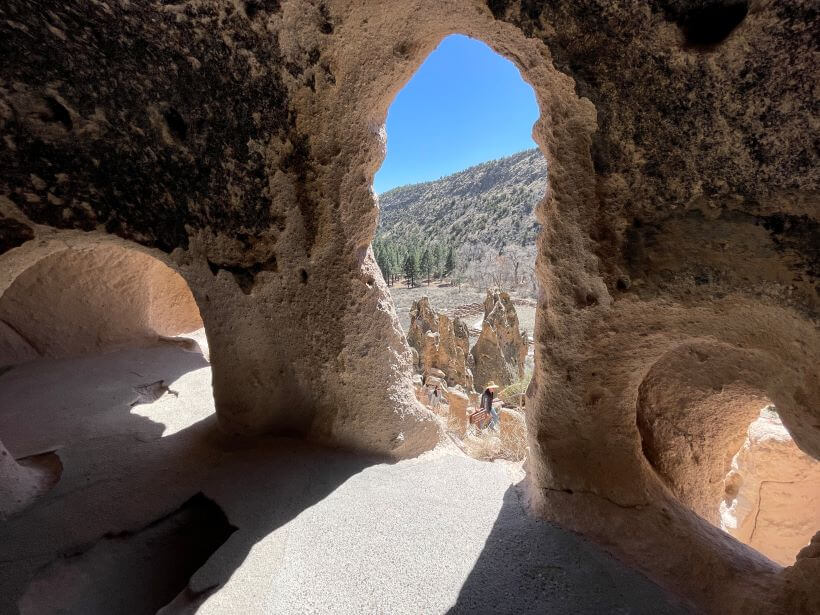
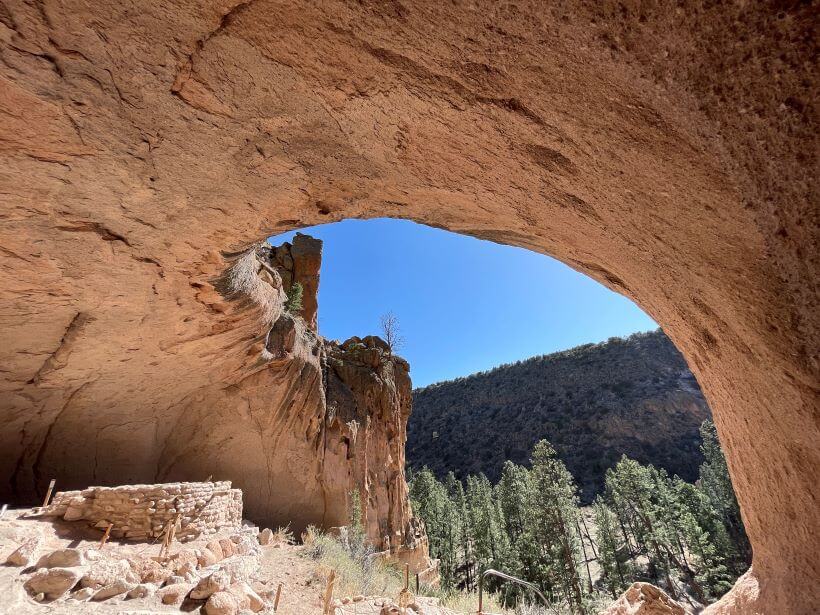
Santa Fe is also a great steppingstone to some of the attractions in the area, like the Bandelier National Monument, about an hour drive from the city. It is home to several thousand ancestral Pueblo dwellings, most of which were built between 1150 and 1600 AD, although evidence of human life in this region dates back 10,000 years.
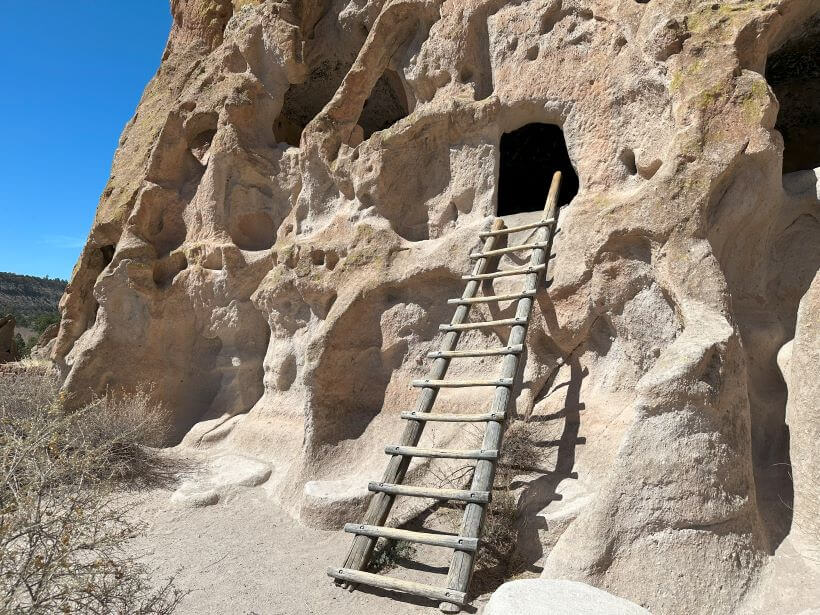
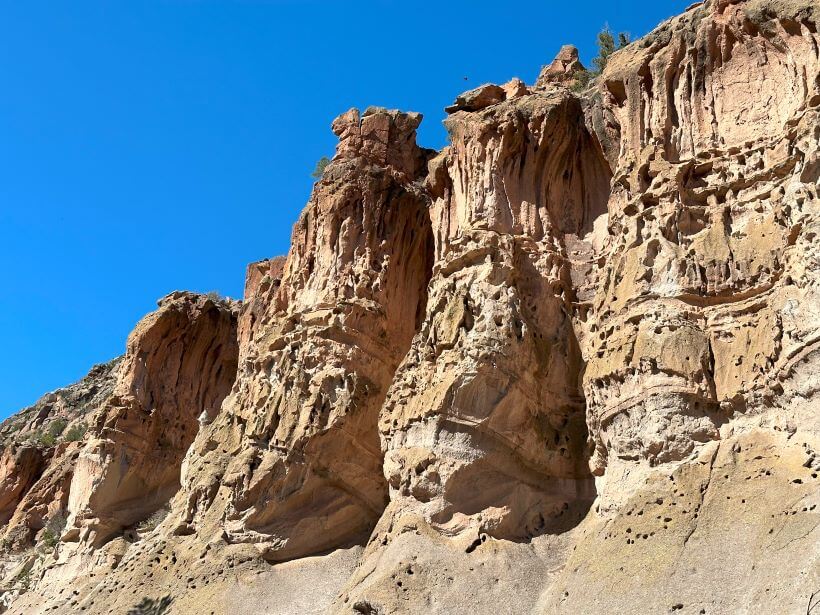
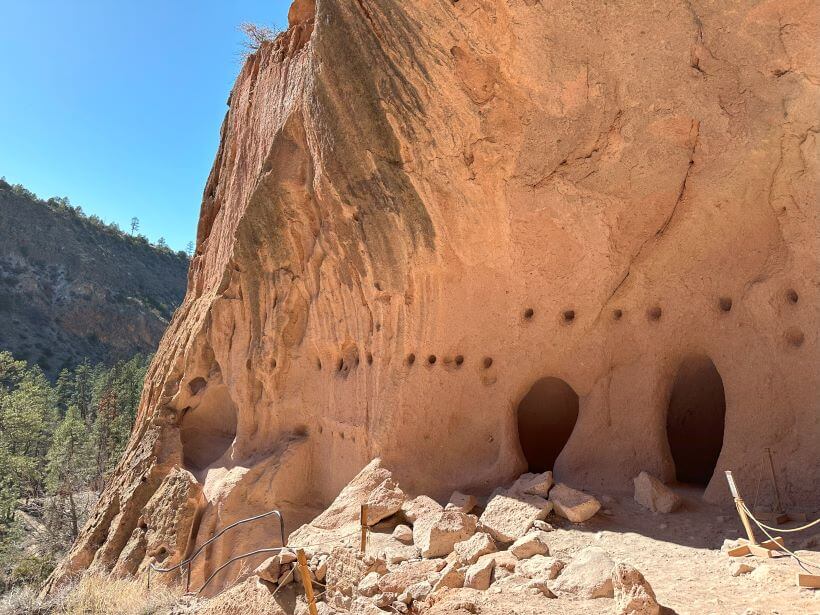
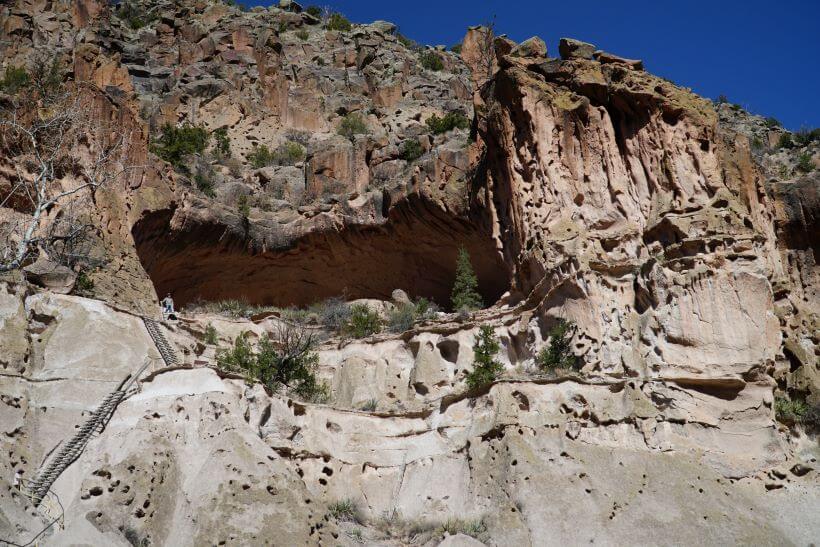
The cliffs surrounding the canyon are actually made of tuff – a relatively soft, and porous rock formed by volcanic ash that has been compacted and cemented into the cliffs we see today. Easily susceptible to the elements, these tuff walls have multiple holes and cave-like openings that give them a distinct Swiss-cheese like appearance. These openings were further enlarged by the ancient Pueblo people and converted to homes.
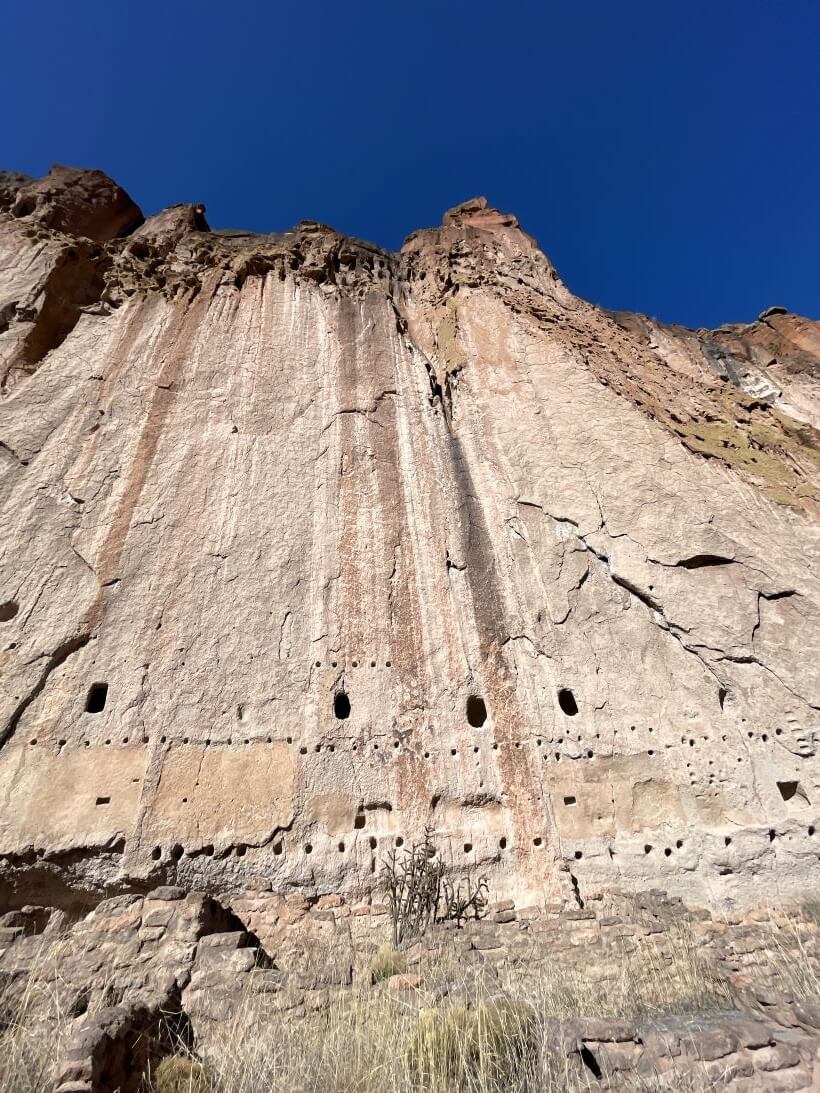
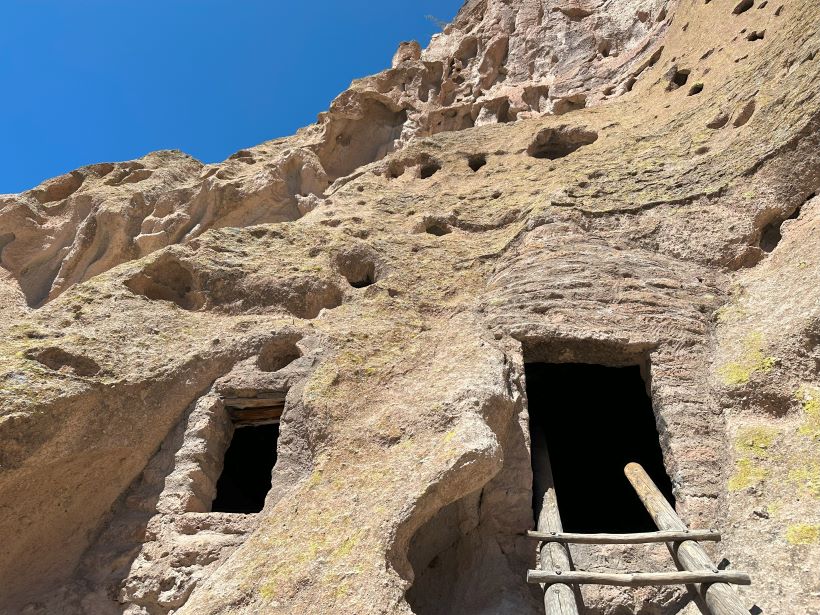
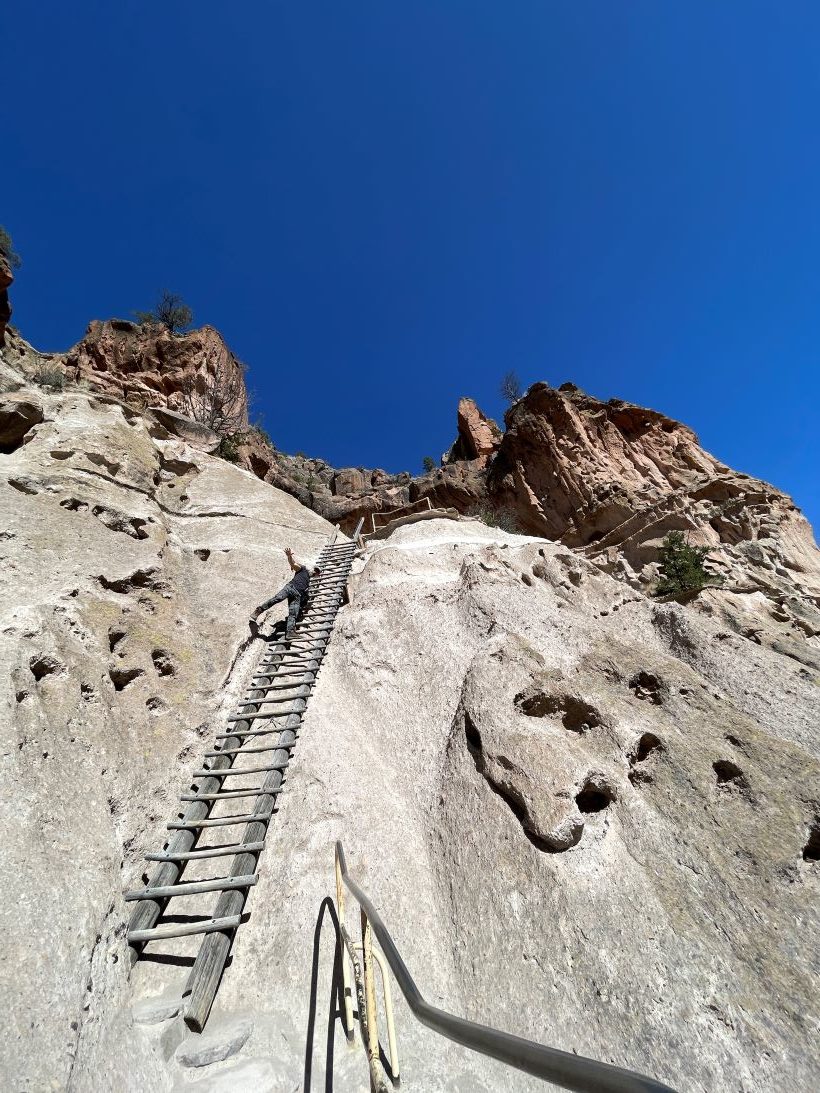
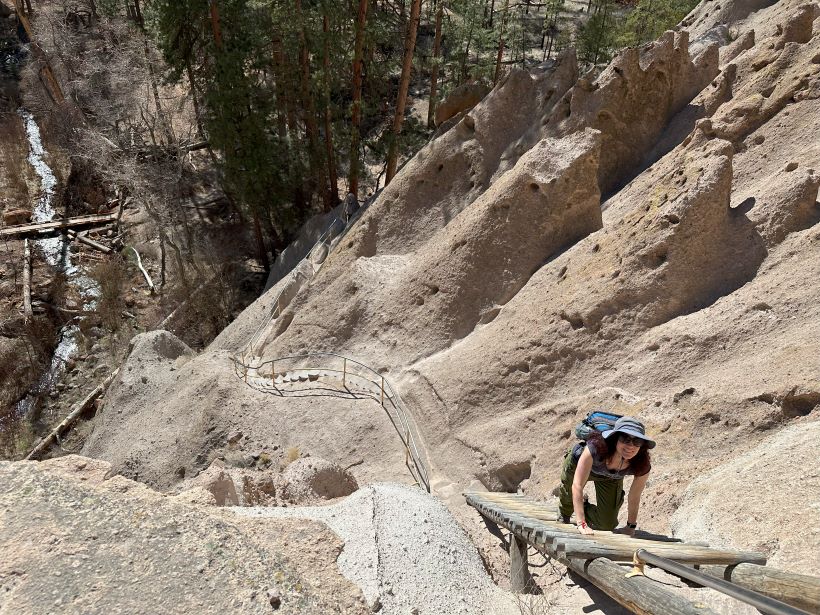
Try to get to Bandelier before 10am or after 1pm, as the visitor parking lot gets full quickly. However, if you’re up for hiking, you can take the Frey trail – a 3-mile loop trail, leading down to the canyon, and connecting to the Main Ruin Loop Trail where the dwellings are. The parking lot at the trail head is empty, and the park rangers will let you in, if you tell them you’re hiking the Frey trail. The only downside to this is that you have to hike back up about a mile, before the trail flattens, but the advantage is that you can see the site from above, and you don’t have to wait. In that case, plan to spend about 4 hours.
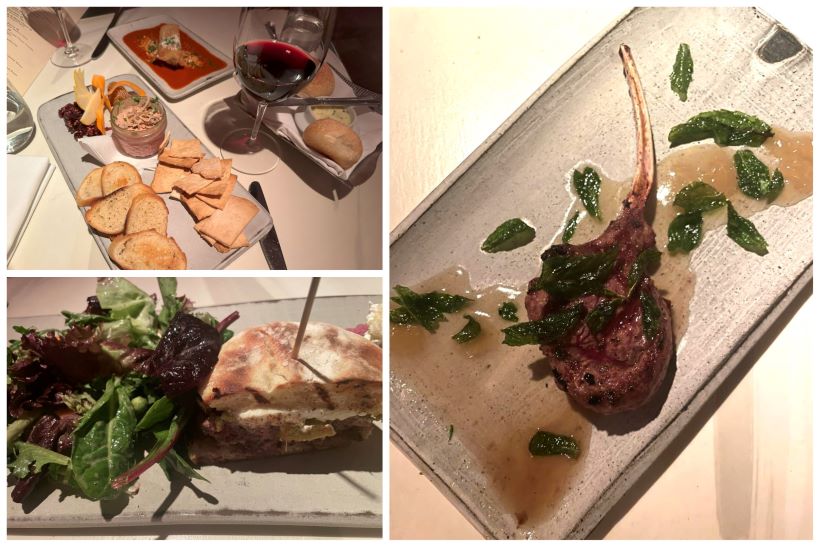
We ended the day at Joseph’s Culinary Pub – a fantastic restaurant serving local and international specialties, featured in Guy Fieri’s Diners, Drive-ins, and Dives. Be sure to order the Crispy Chicken & Cheese Tamale in red chile sauce!
At a glance: Santa Fe
Where to eat
- Joseph’s Culinary Pub – downtown
- Anasazi Restaurant – downtown
- Market Steer Steakhouse – downtown, at Hotel St. Francis
- Coyote Cafe – downtown
Where to sleep
- Hotel St. Francis – a beautifully renovated and stylish boutique hotel, located in downtown
- NOSA Restaurant & Inn – this hidden dessert retreat is about 50 minutes away from Santa Fe. Book a pre-fixed dinner and/or stay the night at one of the four beautiful rooms.
What to do
- Stroll around the old Santa Fe plaza and surrounding streets, lined up with galleries and shops
- Visit the old Cathedral Basilica of St. Francis of Assisi
- Relax at a salt cave spa
- Visit the Georgia O’Keefe museum
Day trips from Santa Fe
- Bandelier National Monument – an hour drive from Santa Fe.
- Kasha-Katuwe Tent Rocks National Monument – a 40-minute drive from Santa Fe. The park features pretty cool white cone-shaped rock formations and slot canyons. However, due to Covid-19 it was still closed in April 2023. Check with the Bureau of Land Management site first before making arrangements
- Visit Taos Pueblo – 1.5 hours drive from Santa Fe. Book a guided tour (tours run every 30 min), then spend more time on your own exploring the pueblo. Don’t leave before visiting the town of Taos too.
Day 3: En route to Bisti badlands
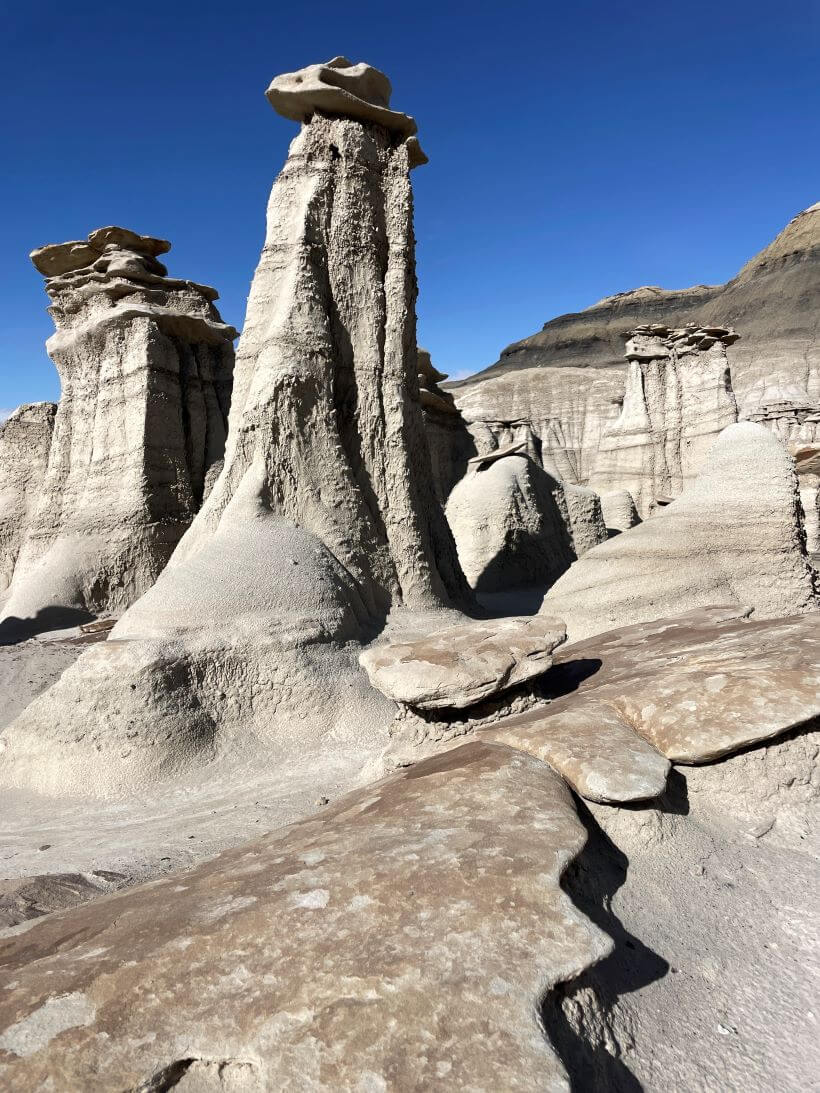
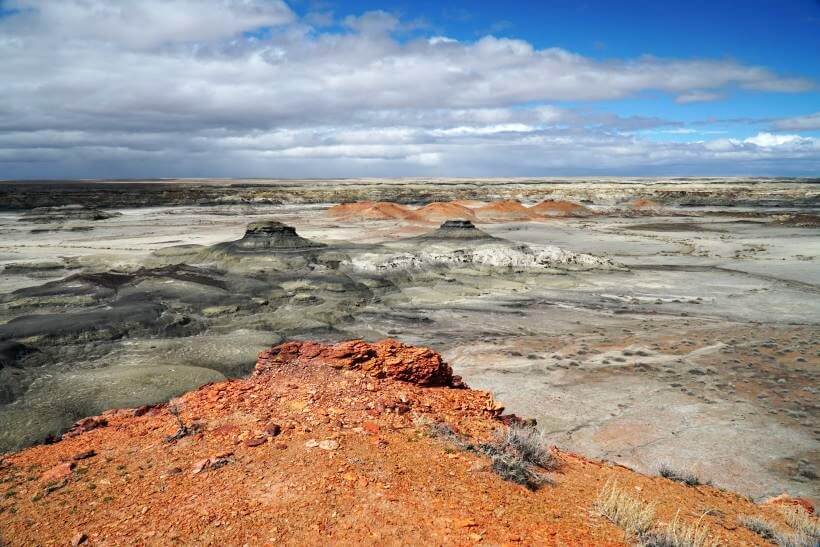
In the morning, we departed from Santa Fe and drove for three hours towards the Bisti badlands, also known as the De-Na-Zin Wilderness area. This expansive and secluded area covers approximately 60 square miles and can be quite challenging to reach due to the network of dirt roads, no cellular data, and no signs to help. The roads get smaller and dirtier and progressively more difficult to navigate.
On the day of our journey, the area was very windy, and as we drove through the desert terrain, we encountered a minor sandstorm. The visibility was poor, and tumbleweeds were flying across the road. We worried that it would be impossible to take pictures of the coveted Bisti hoodoos in these conditions but by the time we got there, the horizon miraculously cleared up.
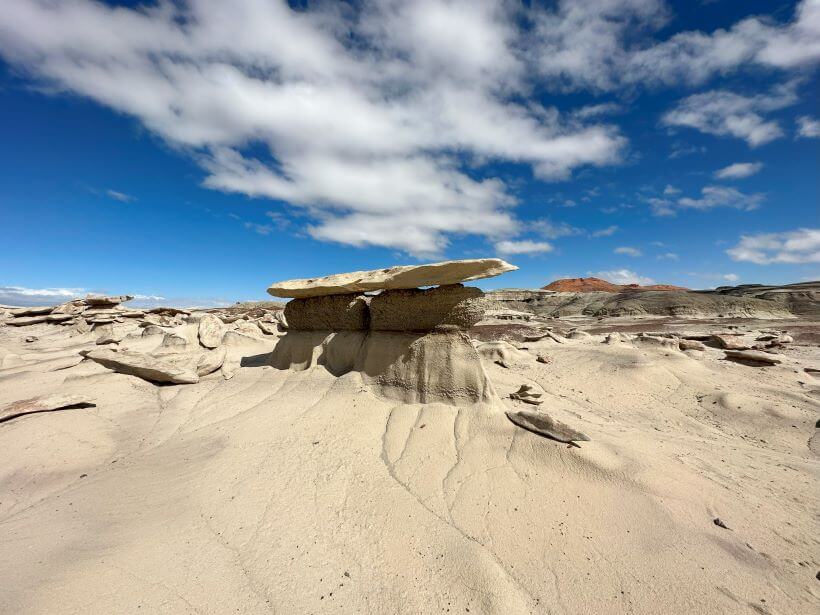
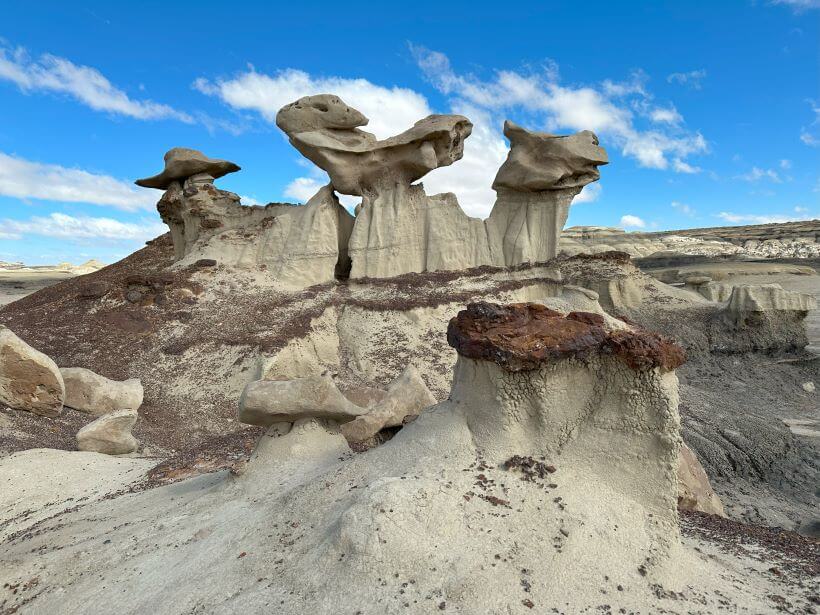
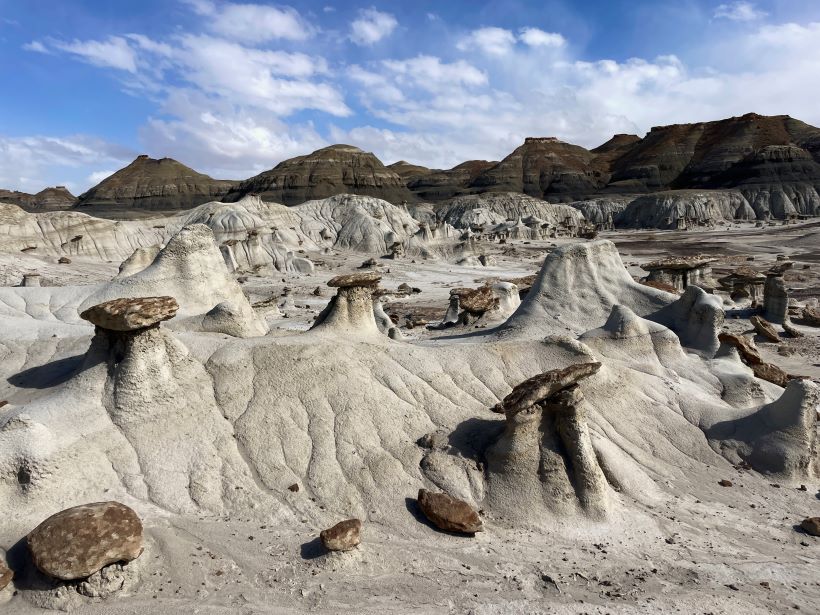
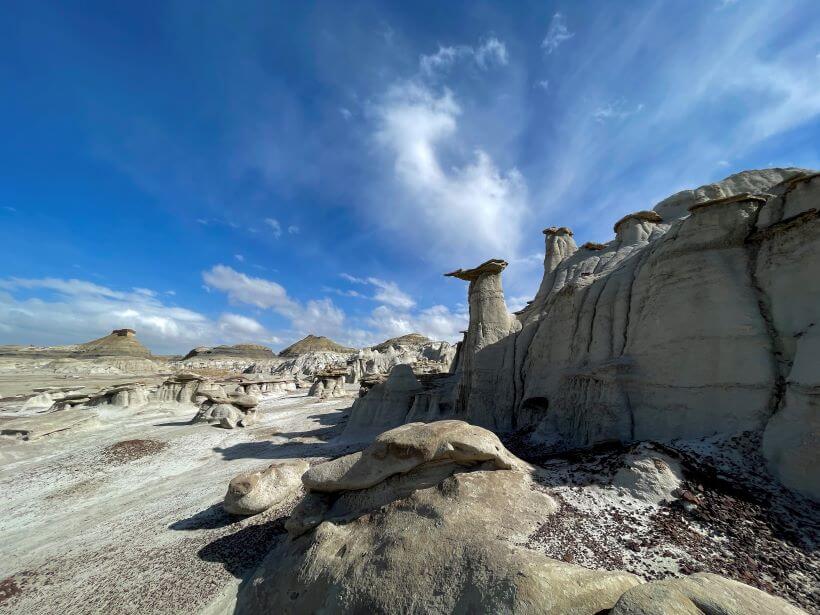
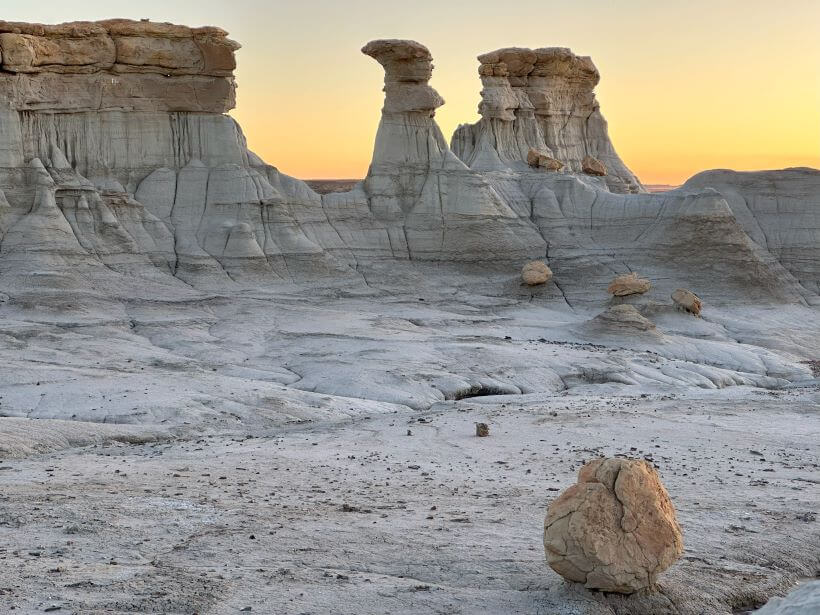
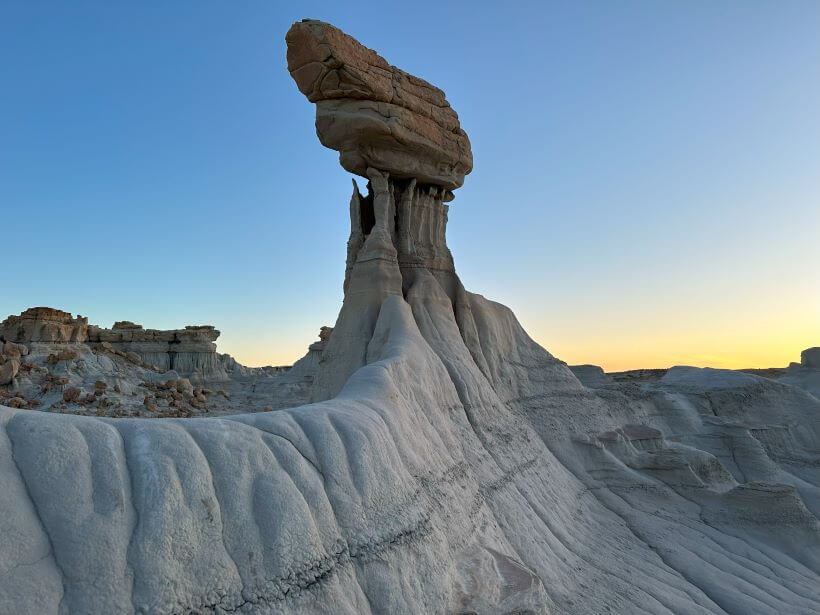
We’d planned to hike the Bisti Badlands trail – a 4-5 miles loop that gave us our first taste of this alien landscape. From the parking area we couldn’t see any visual clues. All around us spread a vast, mostly flat wilderness and it stretched all the way to the horizon. It was hard to imagine that the hoodoos exist within walking distance but we had no choice except to trust in the AllTrails guidance. The desolate landscape made us feel like explorers on another planet – it was strange and exhilarating. A mile and a half later, small ash-colored hills started to appear, and then the hoodoos suddenly materialized out of nowhere.
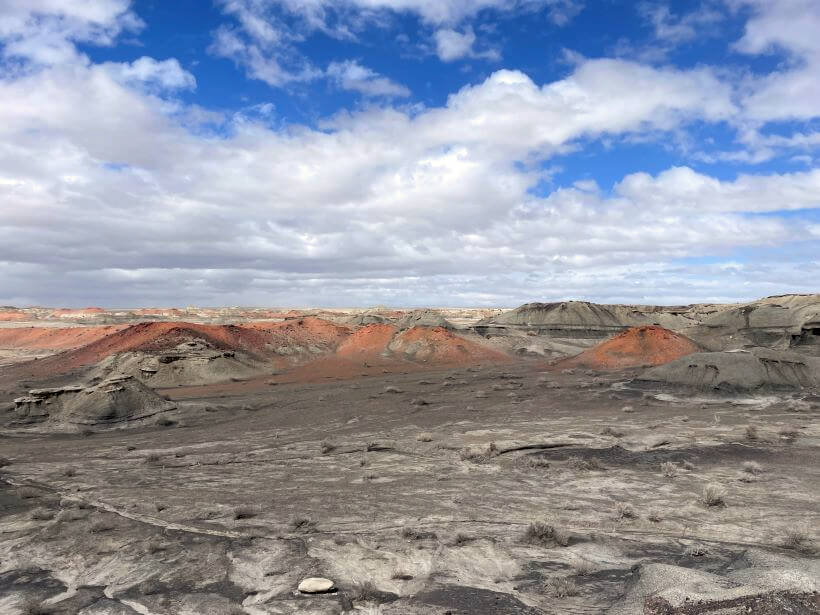
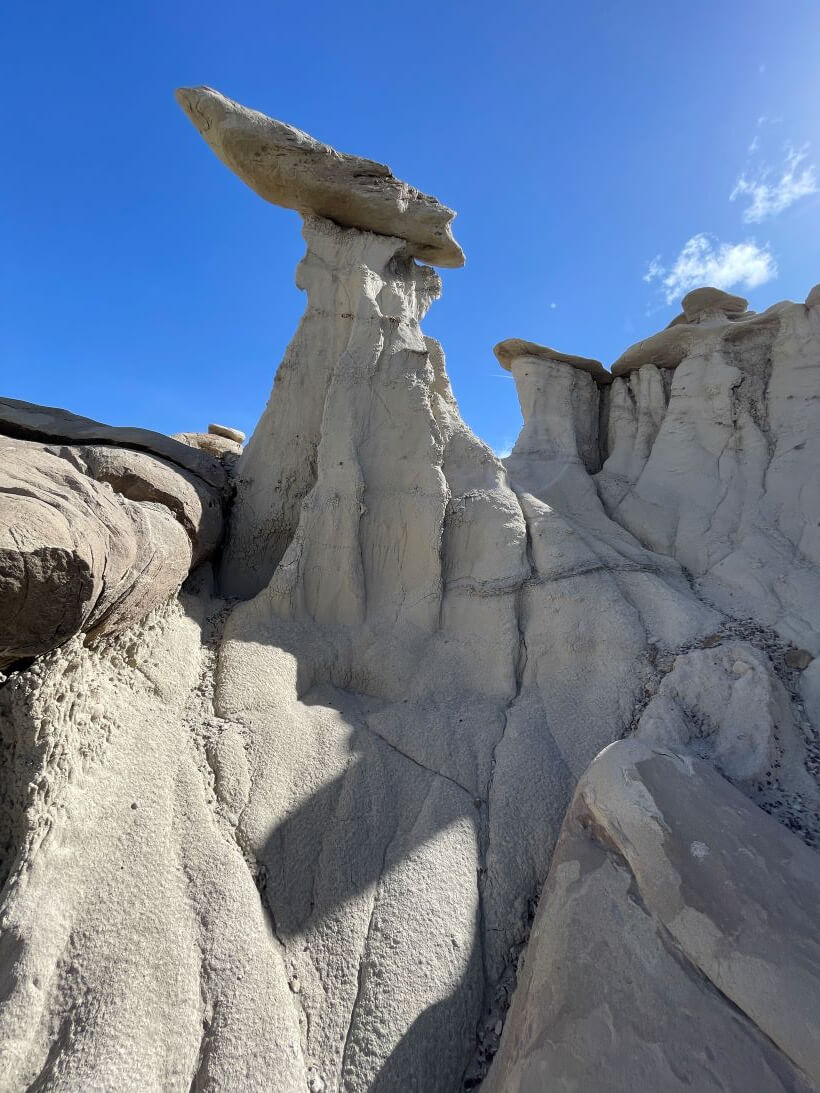
It’s even harder to imagine that this barren terrain was once a lush and swampy landscape, as evidenced by the numerous petrified wood remnants scattered across the ground, as well as the many dinosaur fossils that have been excavated from the surrounding area.
Not all of the formations were hoodoos – there were some that looked like giant turtles, or hatched eggs – the so called Alien Egg Hatchery, or ‘Cracked Eggs’. It was a sight like no other.
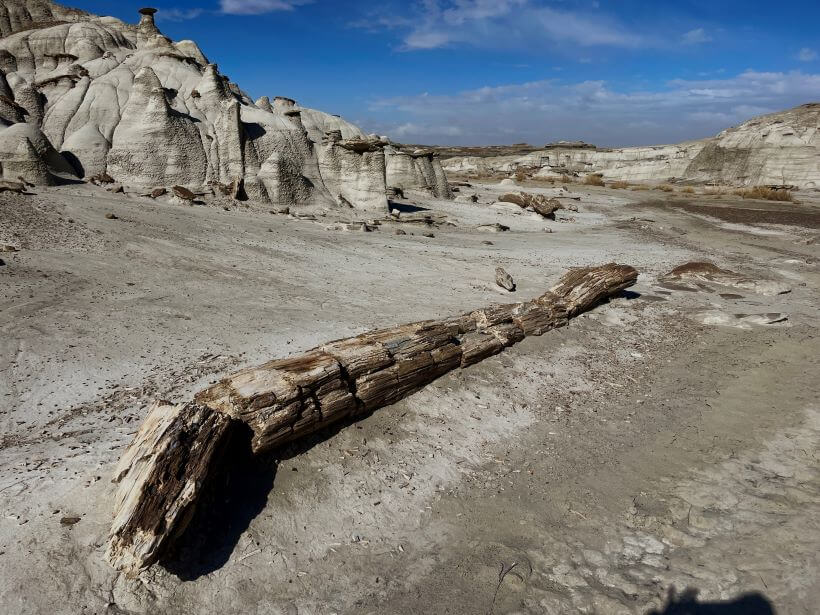
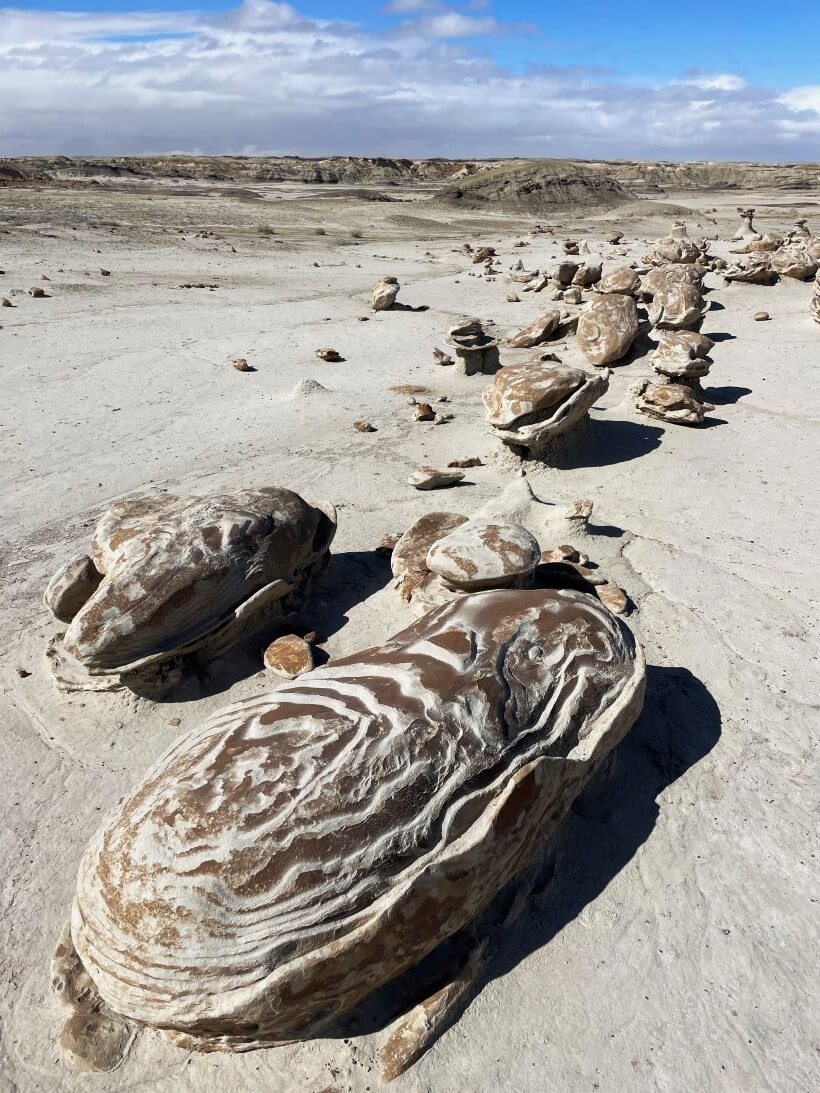
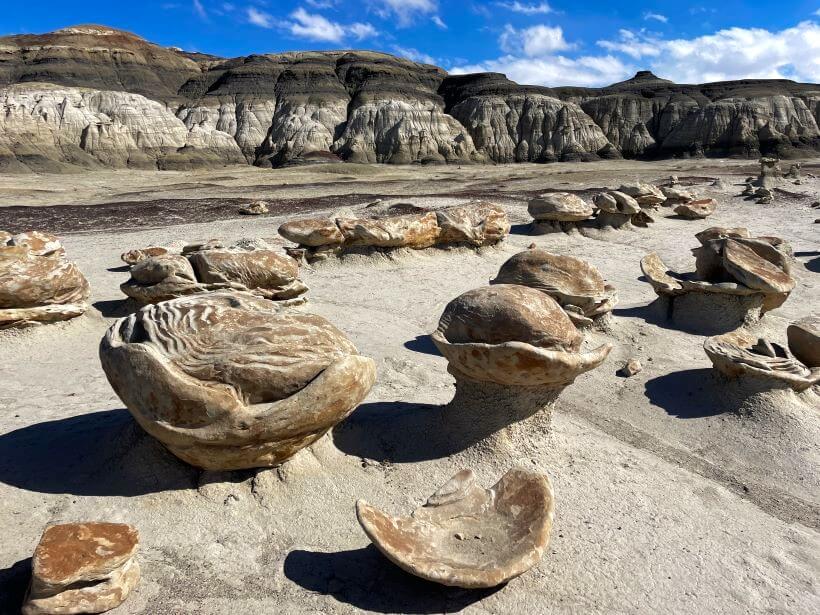
Despite the brutal wind, we took our time and absolutely enjoyed the otherworldly sights, going further inland, in search for yet another surprise. With all the stops and picture taking, it took us about 3-4 hours to complete the hike, and by the time we were done it was getting late in the afternoon.
Word of caution – it’s best to plan carefully your trip to Bisti badlands, as navigating the dirt roads at night is way more challenging than you imagine. The place is so remote and desolate, with no actual trail, or signs. And since there are no visual orienteers, you will almost certainly get lost unless you have the AllTrails app (provides offline access with subscription).
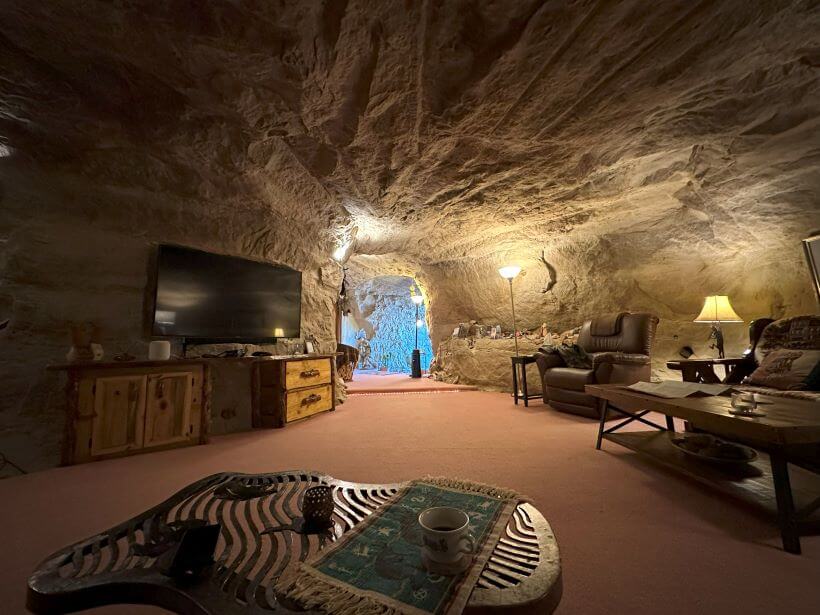
Our next destination was Farmington, where we had reserved our own personal cave dwelling for the next two days!! Kokopelli’s cave had been on my travel bucket list for quite some time. In fact, I dreamt of this entire trip after coming across a picture of it that inspired me to search for other unique attractions in the area.
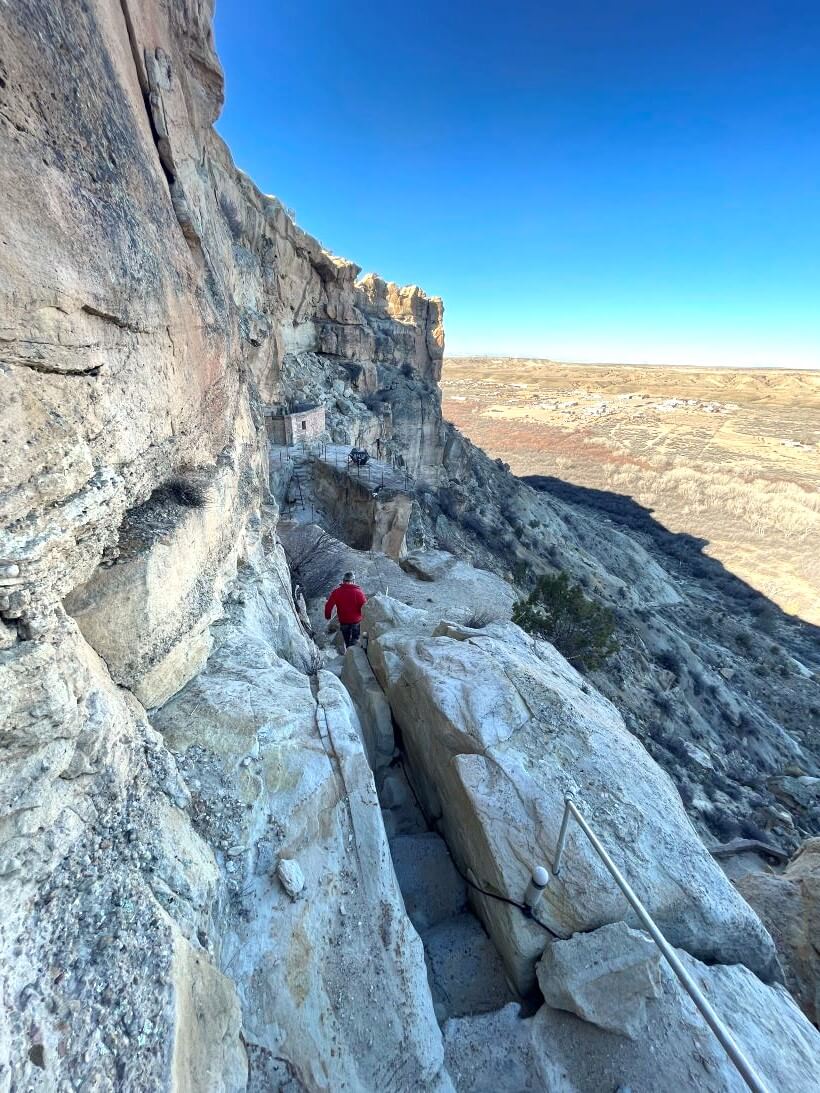
The cave is absolutely gorgeous – spacious, yet cozy, tastefully decorated, and complete with a bedroom, kitchen, living room, even a decorative kiva! It was a dream come true, and it even exceeded my expectation. The cave was built into a sheer vertical cliff, and getting there was an experience in and of itself. It is definitely the most unique place we had ever stayed in, and I cannot recommend it enough! My only regret was not having enough time to fully enjoy it and the weather being too cold to hang out on the cliff “patio.”
Day 4: Mesa Verde, Shiprock, Bisti
As much as we wanted to spend a lazy morning at Kokopelli, our itinerary for the day was jam-packed with activities. After coffee and homemade breakfast at the cave, we set off for our first destination: the Mesa Verde cliff dwellings in Colorado.
The park is only an hour’s drive away from Kokopelli’s cave but the scene quickly changed to snow covered peaks as we ascended the mountains. We knew that guided tours into the dwellings were not available until May due to bad weather conditions but we certainly did not expect to see that much snow! It’s a 30 minute drive from the visitor center to the dwellings, on a well maintained but steep and winding road. The first one we saw was the Cypress dwelling – a massive dwelling area tucked under a giant rock ledge. You can see it from across the canyon but it has been closed to the public even in the summer due to deteriorating conditions.
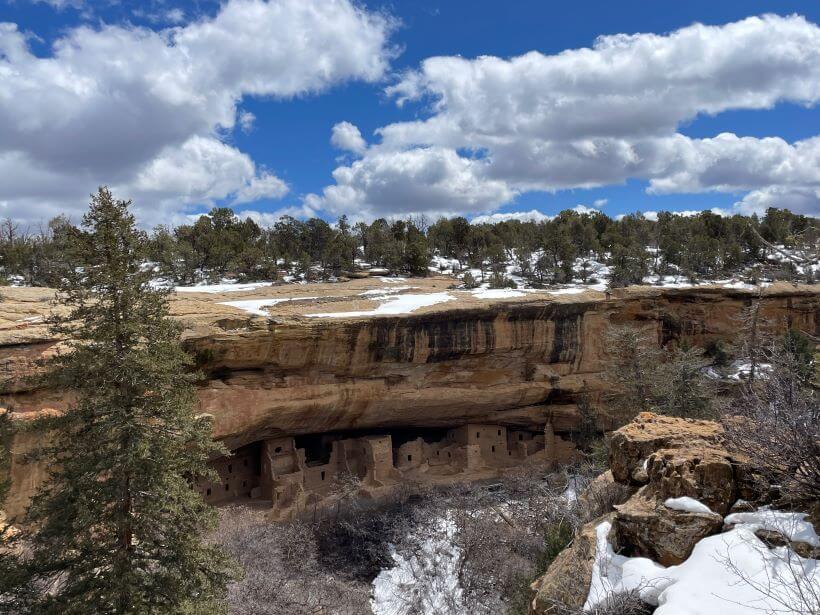
Our next stop was the impressive Cliff Palace – the largest cliff dwelling in North America, containing 150 rooms and 23 kivas (ceremonial rooms). I wish we’d come during the summer when guided tours are available and take you down to the dwellings. At this time of the year, we could only see them from afar. Still, it was worth the visit.
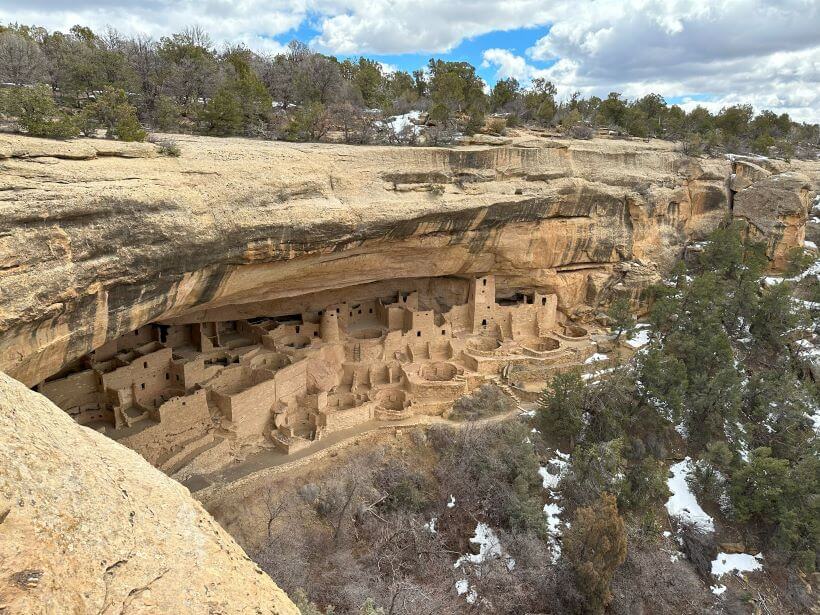
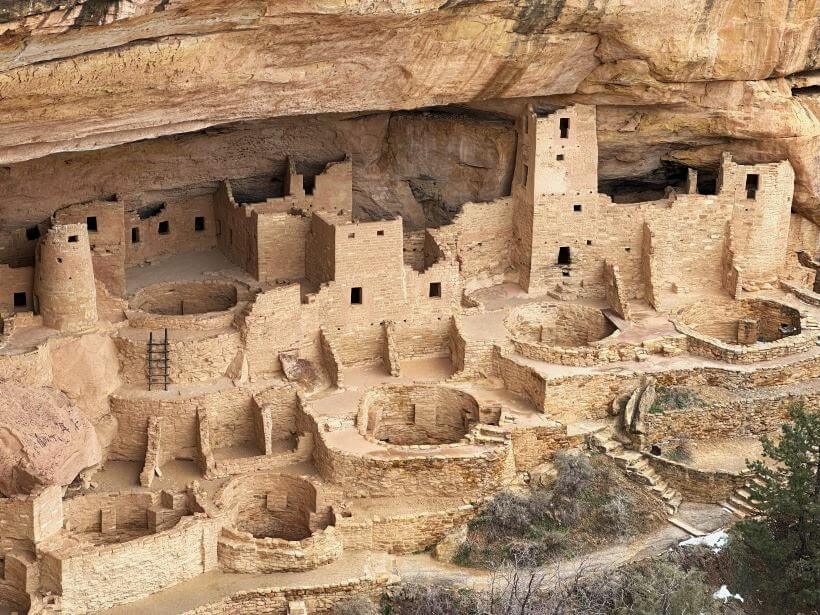
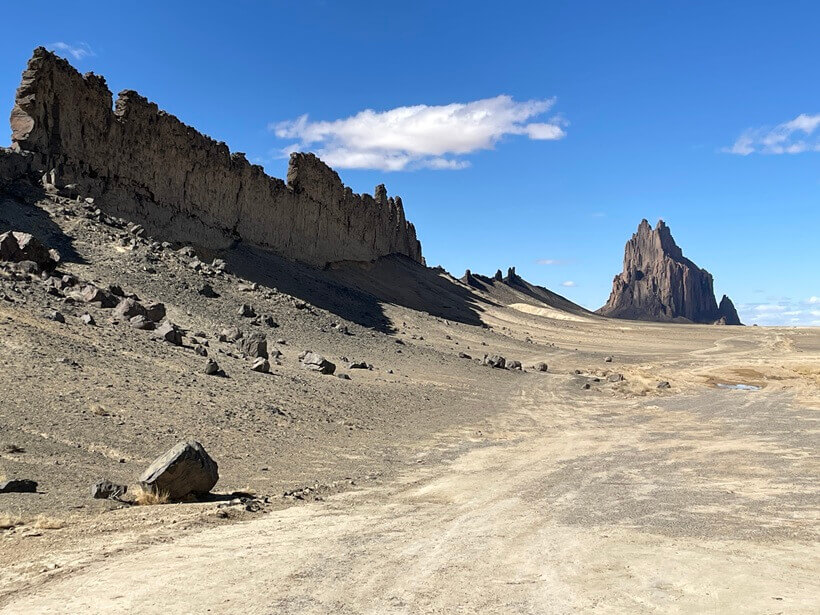
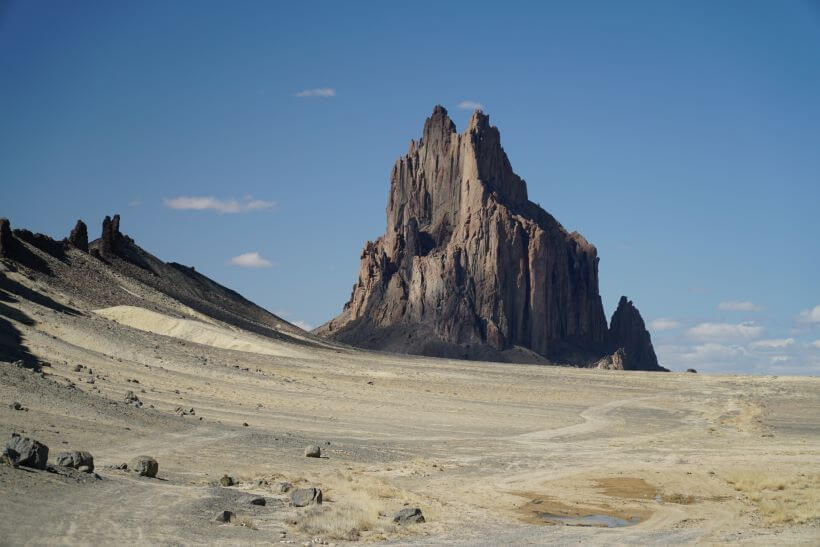
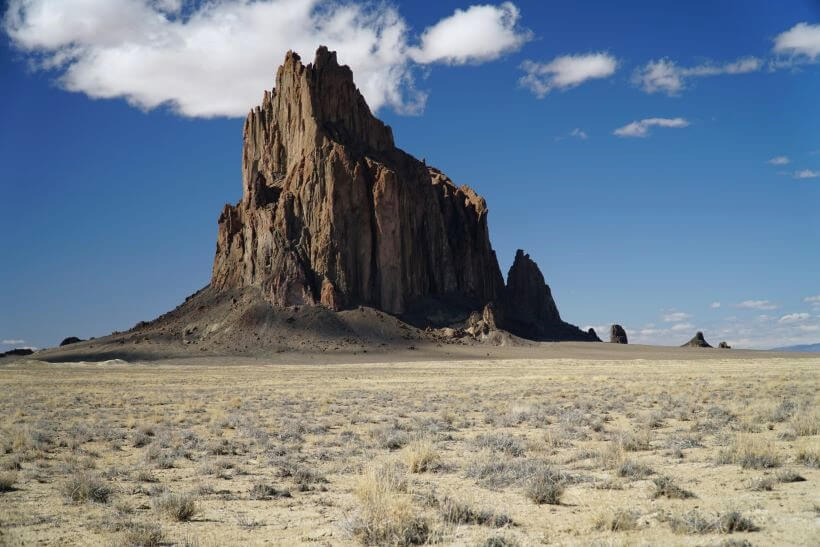
From Mesa Verde we headed south-east towards Shiprock – a lone rock formation that appears out of nowhere, situated on an otherwise completely flat and empty wilderness. Its black Gothic shape made it look like a sinister castle in the distance.
Shiprock is actually the remains of a volcano that used to be about 3 times higher than what’s left of it today. In the center of it is the volcano opening. Another peculiar feature is the lava wall that stands on one side of the rock. It is about 2 feet wide and a few meters high and it looks like it’s manmade due to its exact thickness along its length. Our amateur assumption was that the ground level at the time of the eruption was as high as the wall, and the lava simply filled a crack in the earth the thickness of what looks like a wall today, serving as a sort of cast. As the earth eroded over the years only that crack filled lava remained. It is quite a sight.
To get there, you have to take a dirt road and stop and ask for directions even though you can see it from a distance. There are no signs that will direct you.
I wish we had more time to hike around but we had one more attraction on our list for the day, and it proved to be the highlight of our trip!
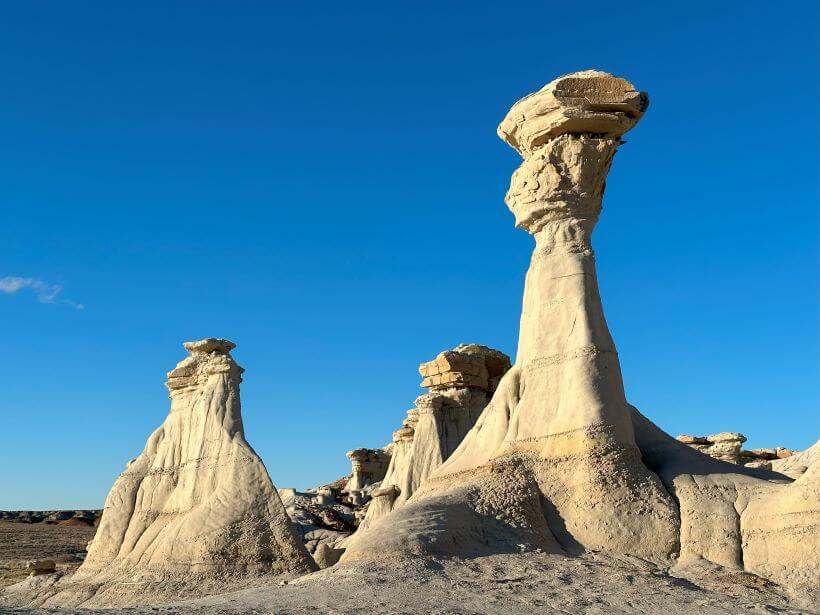
Our goal was to get to a different trail in Bisti badlands ,and catch the magical golden hour light just before sunset. We decided to do the Valley of Dreams Loop, a 3.7 mile trail that promised to showcase some of the more famous phantasmagoric rock formations.
It was tricky to get there, once we drove off the main highway, and started on a maze of dirt roads in the middle of nowhere. Again – no signs, or visual cues exist – only an endless, desolate landscape. We’d downloaded the maps of the area upfront but still Google got lost many times telling us to go left or right where roads didn’t exist. Reception was sporadic or non-existent but somehow, using a combination of AllTrails app, Google maps and Apple maps, we managed to get there. By ‘there’ I mean an empty space, not a designated parking lot. We guessed we had arrived only because AllTrails indicated we were at the trail head, and also by the presence of another car.
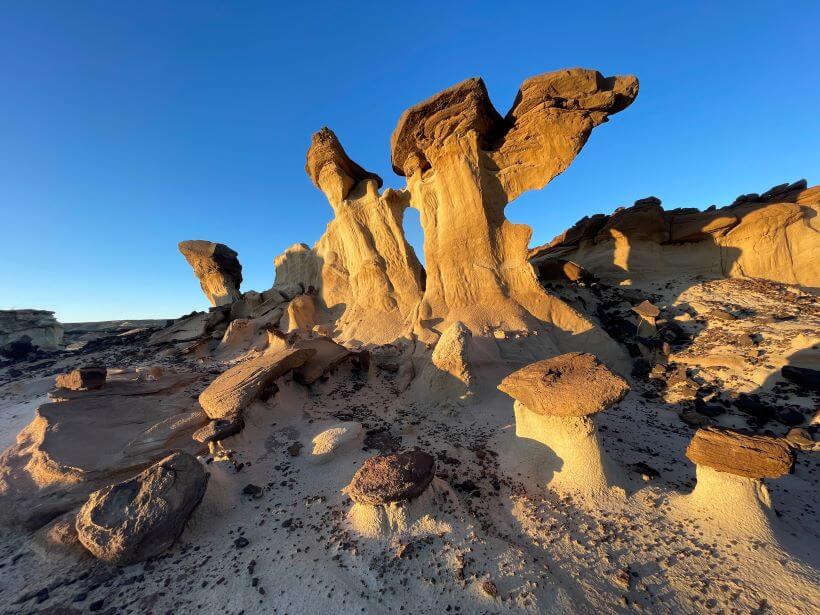
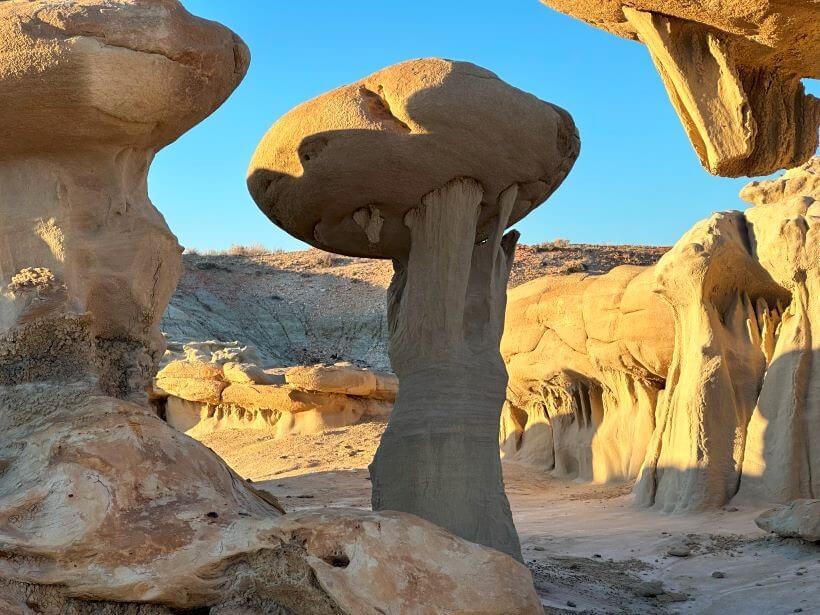
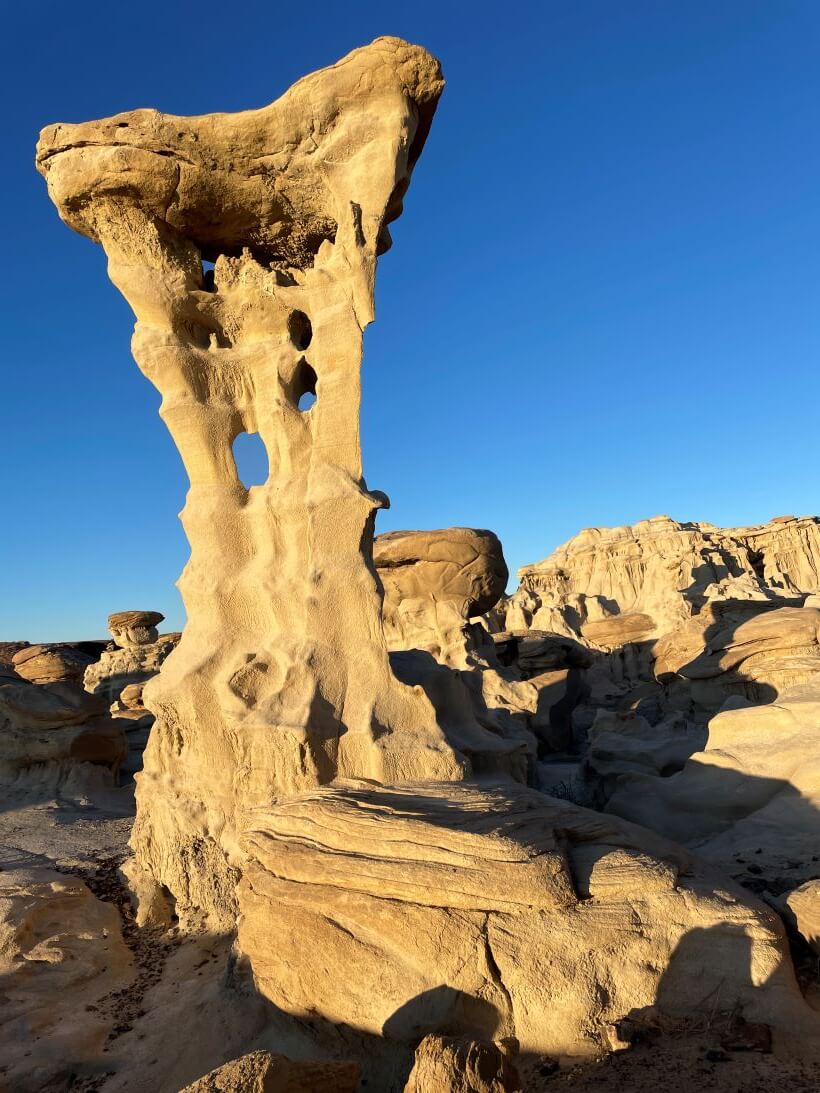
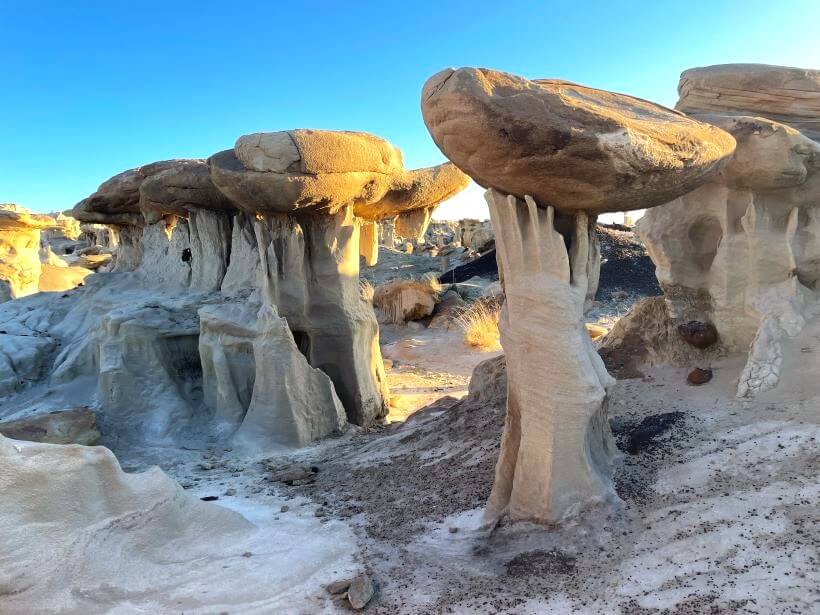
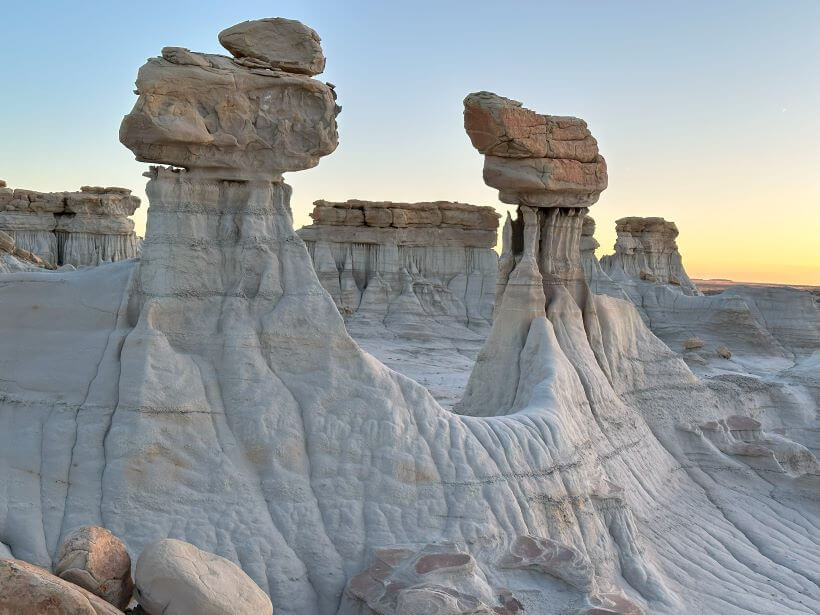
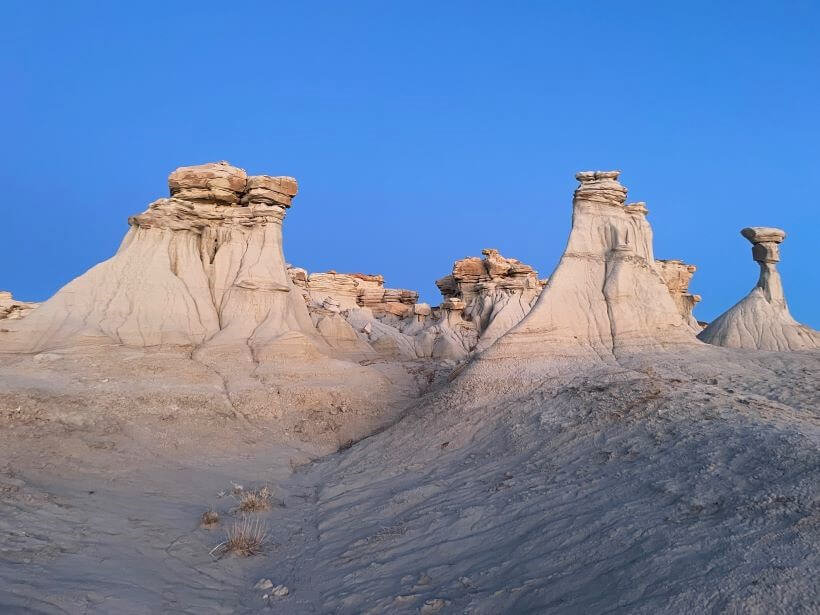
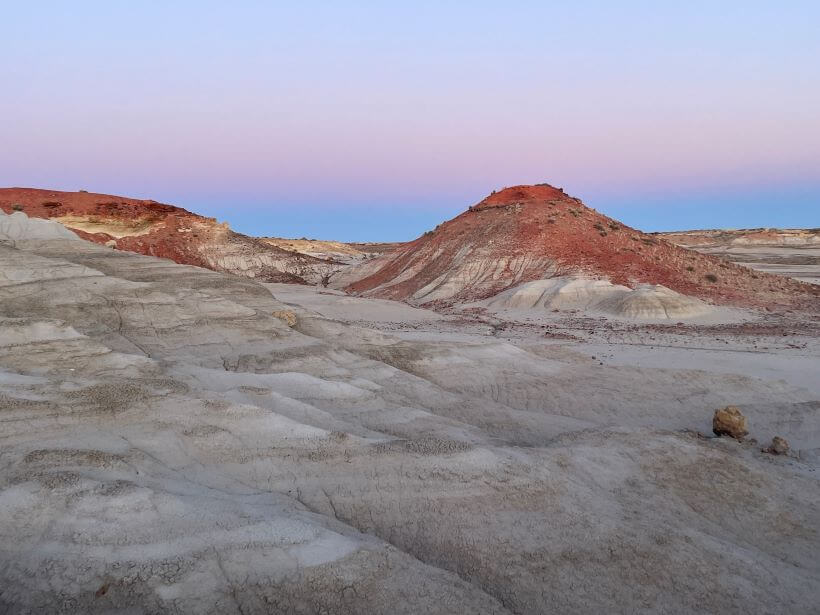
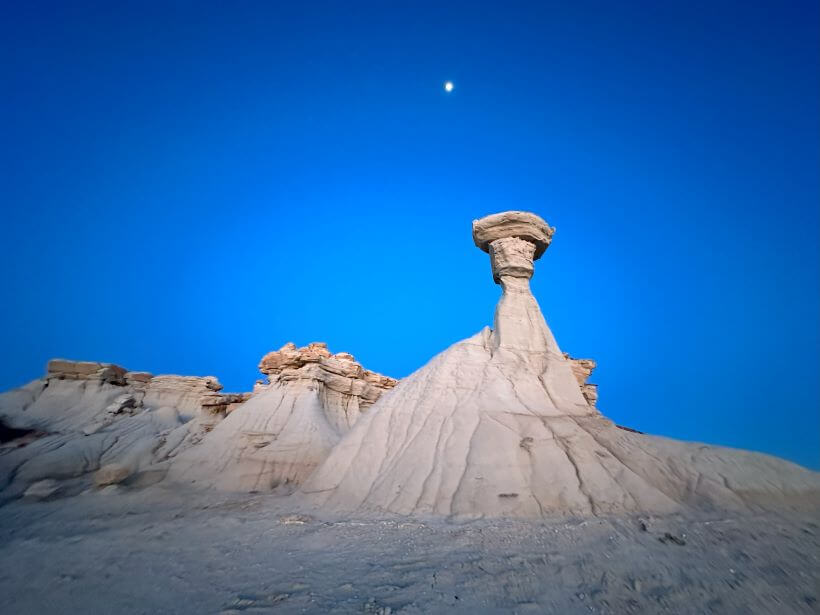
We got there around 6pm leaving us with only an hour before sunset. We quickly dashed straight ahead into the wilderness, following AllTrails directions religiously. After about a mile we reached the first group of formations. These ones were less dispersed and easier to find than the ones on the previous trail. Another half a mile further and we were in the enchanted wonderland of Bisti!
We really felt like Alice in Wonderland, awe struck and more exhilarated with each new surreal shape we saw. There were hoodoos, that looked like the ruins of an ancient Roman column, some looked like mushrooms, and there was one called the ‘Alien Throne’. Lit by the setting sun, they glowed with warm amber hue, and were simply mesmerizing! It was like we were on a treasure hunt, map in hand, racing against the clock, and the dying daylight, and rushing to claim the next treasure on the map.
Day 5: King of wings hoodoo
Unfortunately, it was time to leave Kokopeli cave. It felt like we didn’t have enough time to fully enjoy it but we had a busy schedule ahead. We planned one more, quick hike in the wilderness in the morning before starting west again, to NOSA Restaurant and Inn, where we had a special 5-course dinner reservation that day.
We lingered at the cave in the morning, not wanting to end this adventure just yet. We took our time with coffee, took a final round of pictures, and finally left.
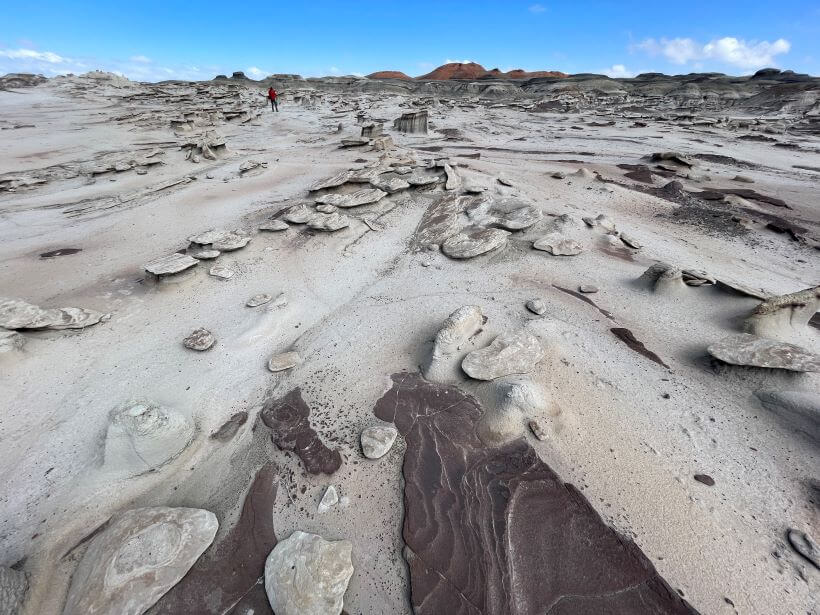
Due to the late start, and getting lost a couple of times, trying to find the King of Wings trail, we arrived there late, around noon. The sun was directly above and in front of us spread infinite sun-baked, barren land, littered with dry tumble weeds. Unlike the other trails, this one had only one attraction – the King of Wings. We read on AllTrails that it was well worth the hike, and time so armed with some water, insatiable curiosity and resolve we headed into the nothingness ahead.
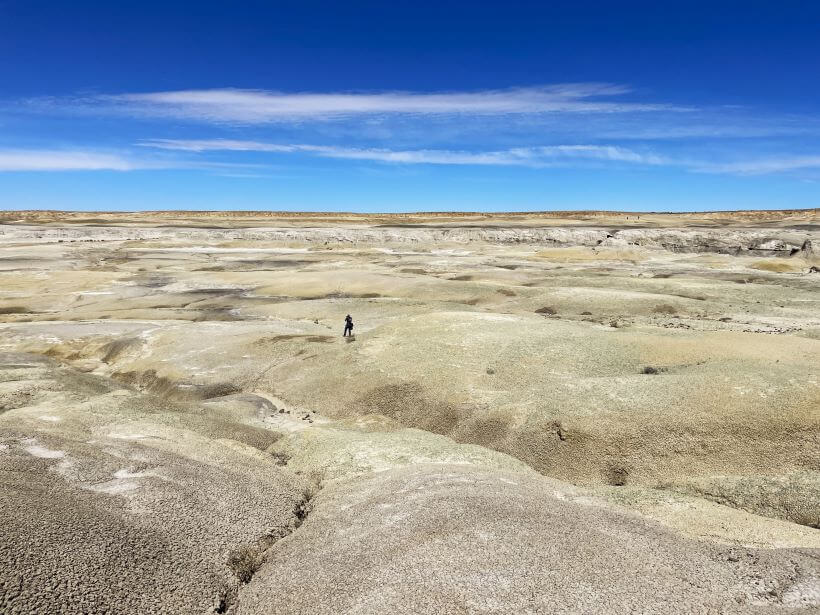
After about a mile, the scenery changed. The ground transformed into a soft dirt, hardened in places but easier to walk, then suddenly we got to the edge of a small valley below us that we had to cross. The directions said we had to go straight…and so we did.
We climbed down and up the slopes of what looked like the dry bed of an ancient river once, and continued forward. We had to cross a few more of those small canyons, the landscape getting even more moonlike and alien, before we got to our final destination.
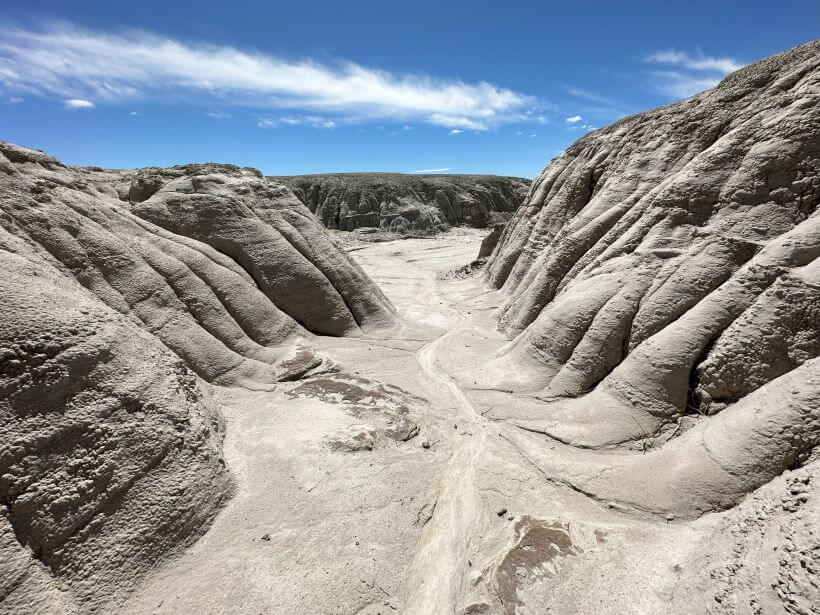
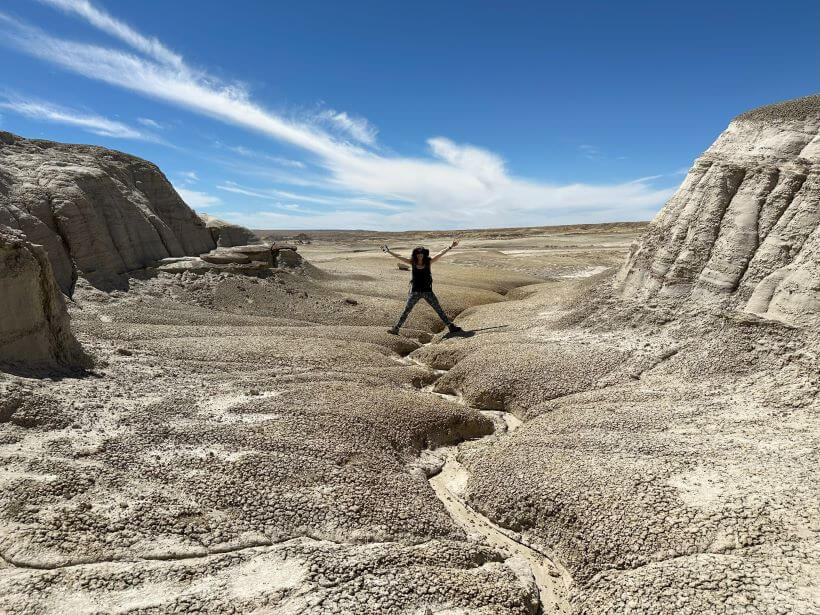
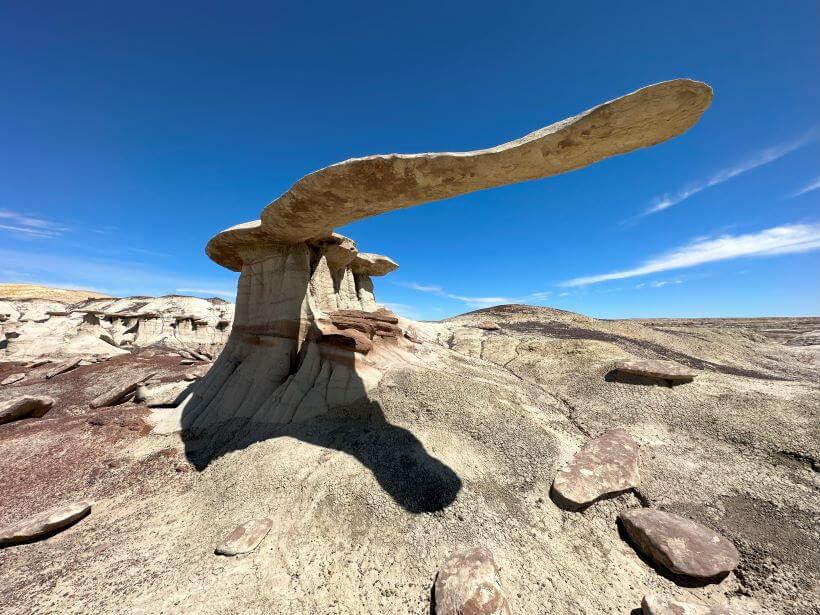
We saw the King right away but didn’t recognize it. It was hiding in plain sight, looking small and insignificant. We’ve seen many small wings like this so we just passed by it. After some time walking around, we remembered to consult the map which led us back to the wing. Looking at it from the opposite direction, it seemed more impressive with a wing top longer than any other we’ve seen and standing a little taller than we thought at first. But it still didn’t quite match the image in our imagination. Was it worth the time and effort? Maybe, if we had some more to spare, but in retrospect we were probably better off going to the Bisti Wings Trail.
At a glance: Farmington
Where to sleep
- Kokopelli cave – the most unique lodging, which deserves to be savored slowly. Best time to visit is in September when it’s warm but not so hot, and you can enjoy the breathtaking views from the cave’s ‘patio’
What to do
- Visit Mesa Verde park to see the cliff dwellings. Best time to visit – after May and before Fall, for a chance to see the dwellings up close.
- Shiprock
- Bisti badlands trail – Not your typical trail. No signs or marked trail exist. Don’t go without AllTrails app, download the area maps upfront, and rent a high clearance vehicle.
- Bisti badlands – Valley of Dreams loop – incredible but no visible trail exists. Arm yourself with AllTrails app, and best time to visit: 1-2 hours before sunset.
NOSA Restaurant & Inn
After a challenging drive on meandering dirt roads, it was a relief to finally hit the concrete highway. We were excited to reach our next destination, NOSA Restaurant & Inn – a fine desert retreat, with four suites, a seasonal cuisine, and fine dining experience, managed by Chef Graham Dodds.
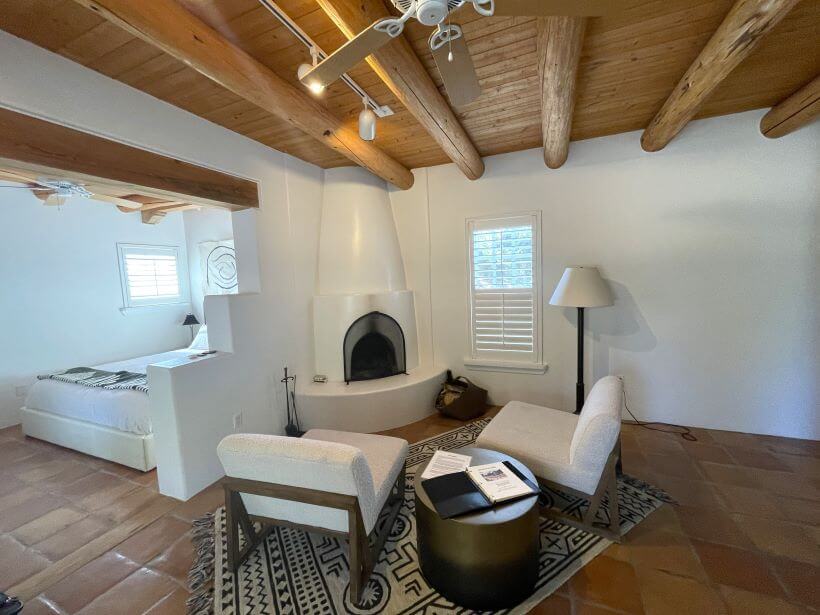
Our room was just as beautiful and elegant as the pictures had promised, if not more so. The modern Spanish decor was cozy and inviting, complete with a wood-burning fireplace, a luxurious bathroom, and even a jacuzzi. The linen sheets on the plush bed exuded a posh feeling that could have graced the pages of a magazine. The prefix 5-course dinner experience by Chef Dodds, felt intimate and cozy and was the perfect ending of the day.
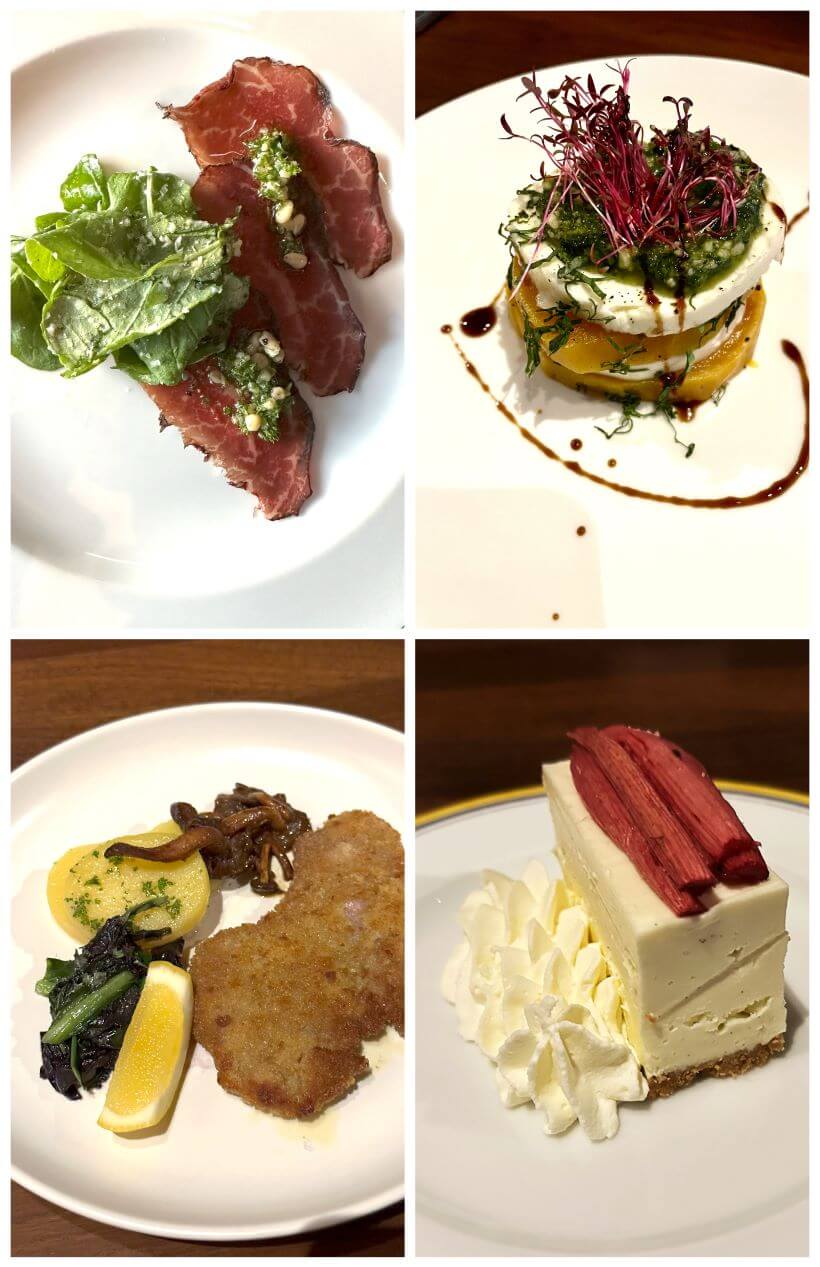
At NOSA, you get spoiled not only at dinner, but at breakfast too. I’ve never had a 3-course breakfast, and certainly didn’t expect it when we booked our breakfast for the next day!
Another bonus of staying at NOSA Inn, is a hidden treasure nearby – one of the mysterious hand-carved caves that artist Ra Paulette, painstakingly etched across the domes of the sandstone caves he dug out himself, called the Heart Cave.
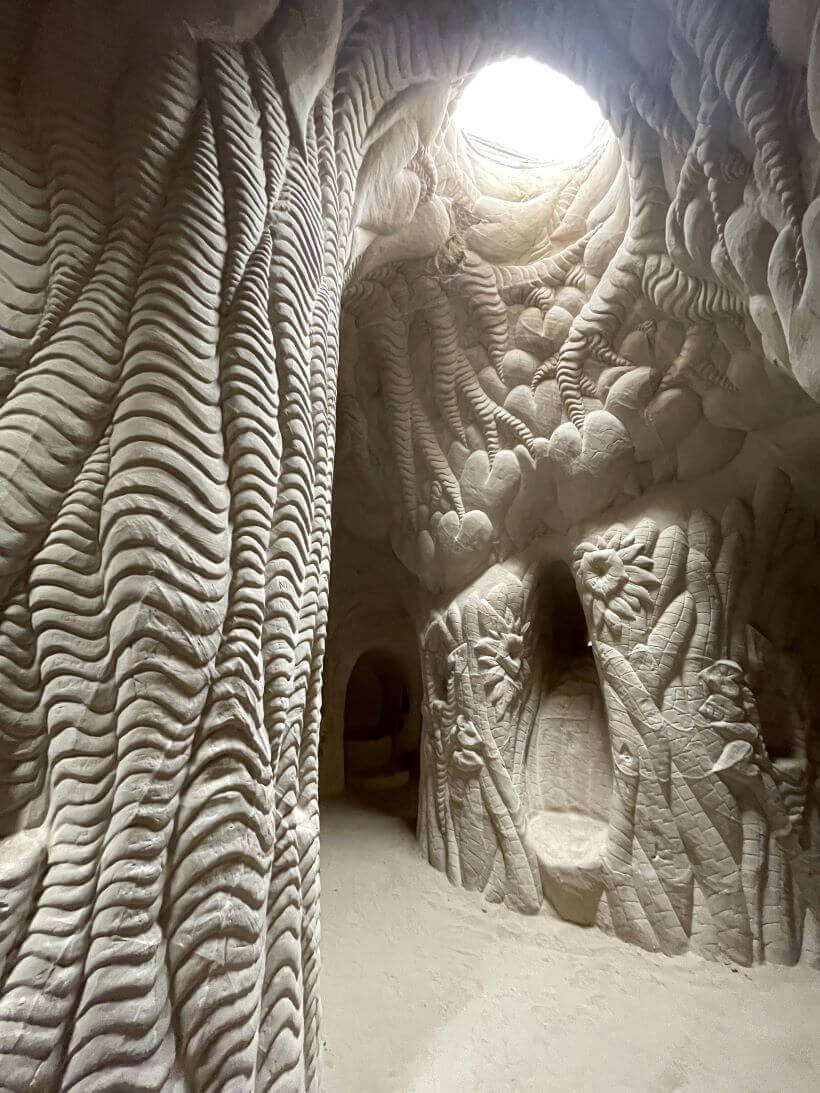
Carved out of the soft white sandstone that abounds in the area, the cave is an artistic masterpiece, so beautiful and unusual, it resembled nothing like we’ve seen. Soft curves chiseled in the rock formed waves that sprung hearts and flowers from what looked like the stem of a tree – the tree of love perhaps?! It was naturally lit by a few holes in the ceiling and was monotone white, with no color variation, as if uniformly painted. It took the artist a year to complete.
Although it lasted only 10 minutes, this brief encounter with such unusual art was one of the many highlights of our trip.
Day 6: Taos
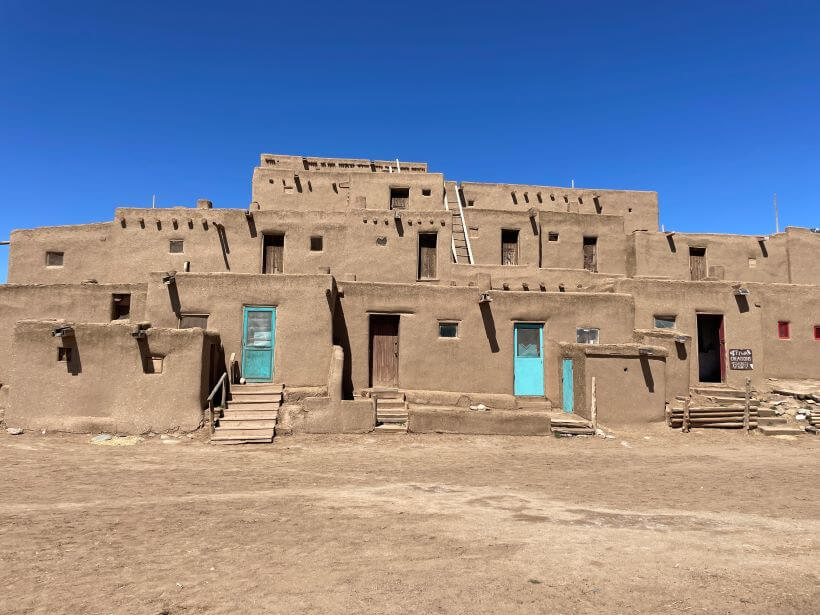
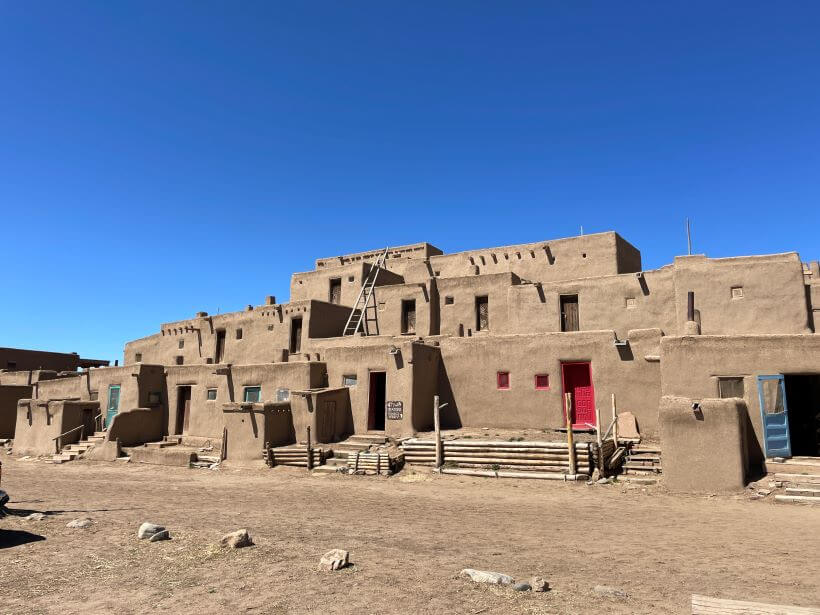
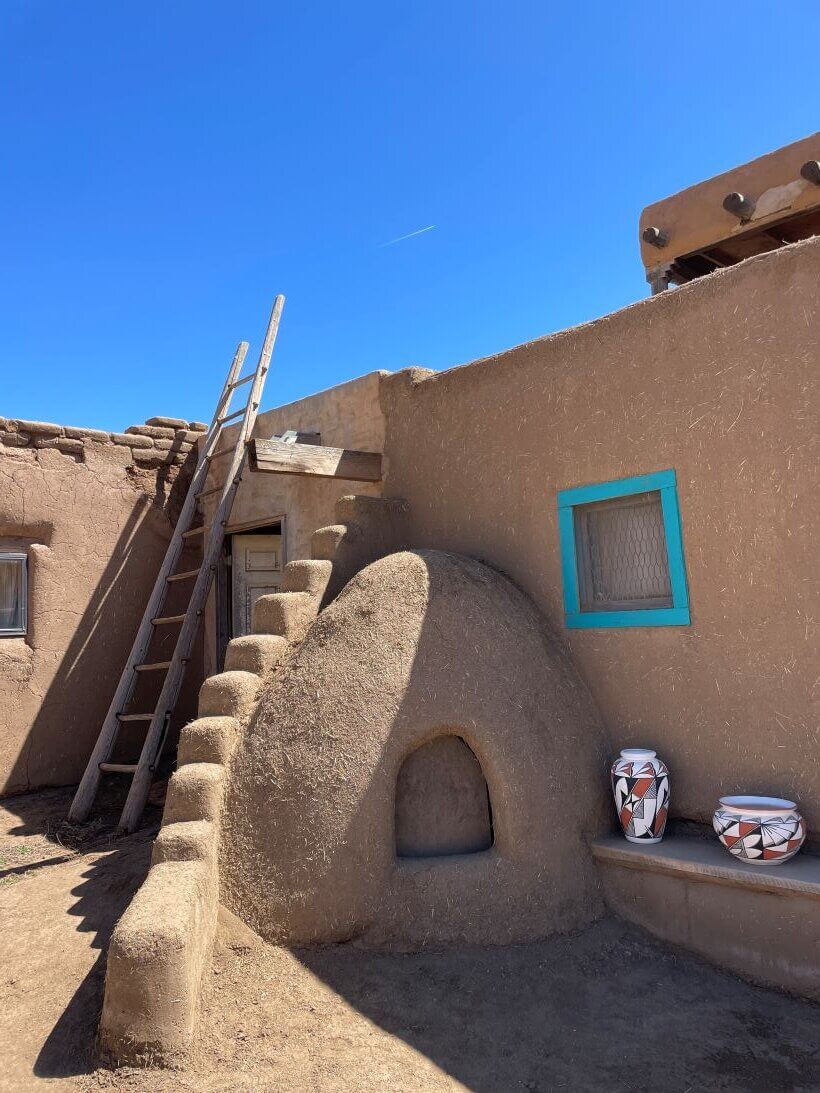
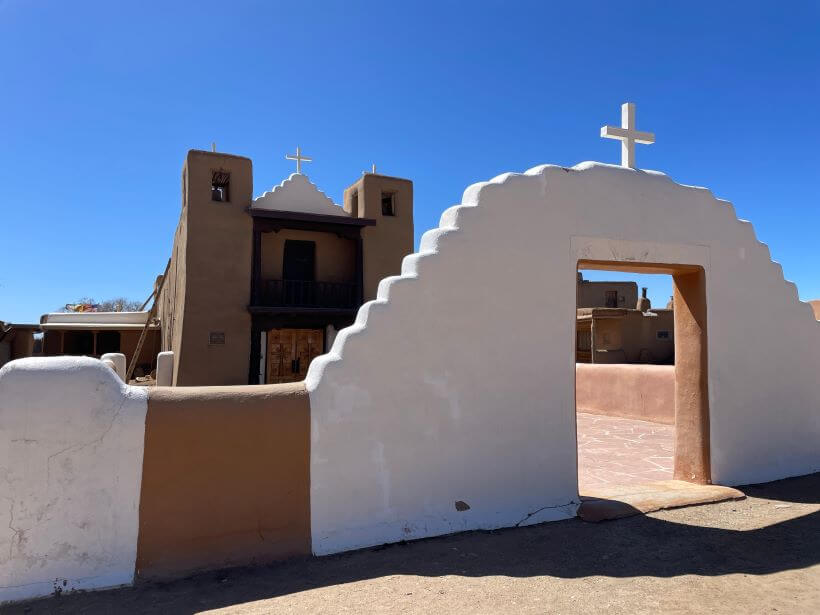
It was time to go visit the indigenous people adobe settlement, also knowns as Taos Pueblo, the northern most Pueblo in New Mexico, and one of 19 such settlements. These days, the Pueblo is mostly used for tribal gatherings, ceremonies and celebrations, but there are about 10 families left, who permanently live in the adobe houses, made out of dirt, water and straw.
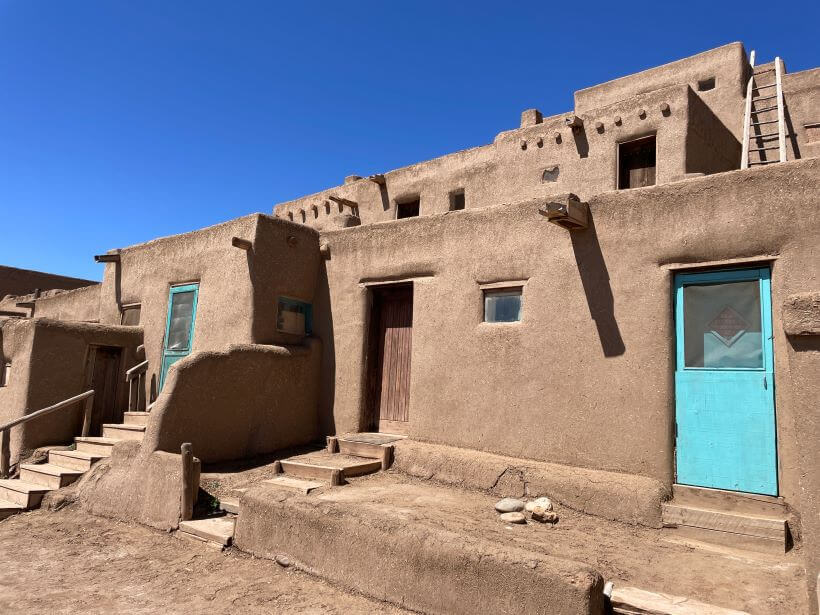
Originally these adobe homes did not have ground level windows or doors – the only way in or out was through a small rooftop opening. Over time, however, many were remade to allow for a window and a door for convenience. Sticking to tradition, the tribal elders who make decisions about everything related to village life and its people, still do not permit running water and electricity. The reasoning is simple -you do not need electricity as you go to bed with the sunset and get up with the sunrise. Besides, the adobe houses, are great heat insulators, providing much needed cool in the hot summer months, and warmth in the winter. Only recently, some of the more elderly people were allowed to use gas instead of fire for cooking, to ease on the physical labor required in the fire tending.
The indigenous people of the Pueblo have been growing corn, squash and beans – the main staple of their diet since ancient times. A modern day addition, and a specialty in their diet is the popular fried bread, eaten with sugar or salt.
It’s best to take an organized tour, and then spend some time on your own to wander around the village, visit the many souvenir places selling local art, and talk to some of these people who grew up there and eagerly share stories from their childhood. It was such an interesting and humbling experience.
Also worth a stop is downtown Taos – full of artsy stores and galleries like every other New Mexico place we’ve been.
One place deserves a mention – Chocola – a unique coffee shop that sells artisanal chocolates from around the world. You can find all sorts of unusual flavor combinations like dark chocolate with bread and olives, smoked chocolate, fermented black tea and lavender infused bars, and many more creative combinations.
As we were marveling at the chocolate collection, our attention was drawn to what looked like pudding topped with a cream served in small cups, that all people were ordering. It was dulce de leche mousse! We bought a few of the more unusual chocolate bars and of course a cup of delicious mousse!
Day 7: White sands – a desert unlike any other
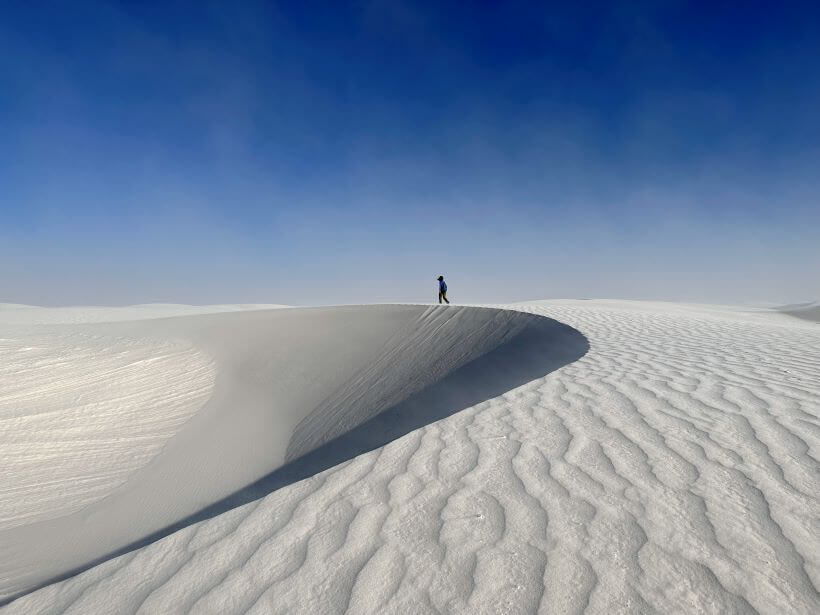
Next on the list was the White Sands dessert. It’s about 6 hour drive from Taos, so a stop at Albuquerque is a nice way to break the drive. As we were approaching the dessert we realized there is a warning of a sandstorm. We could see tiny sand twisters forming in the distane, as we were approaching. Fortunately for us, they still let us in, and it was a surreal experience!
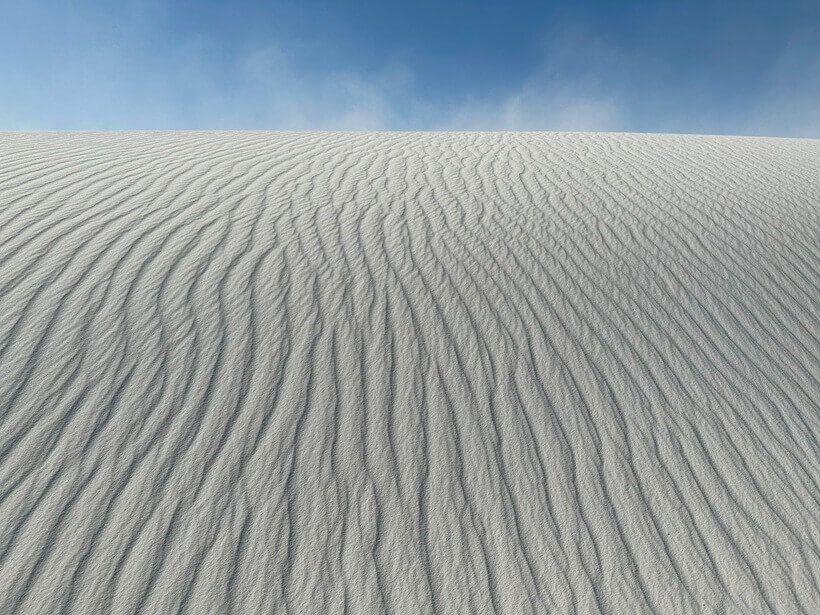
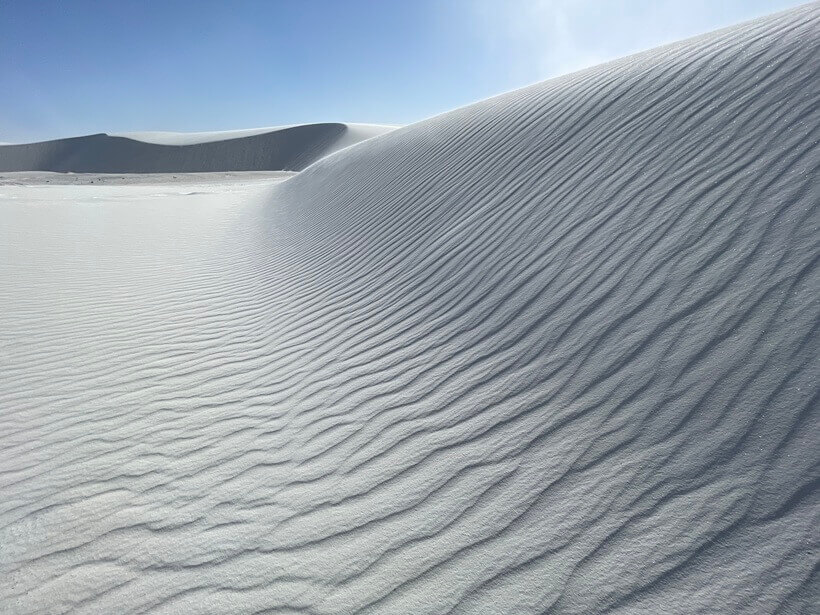
White Sands is not your typical desert – instead of sand, it’s made of gypsum salt crystals. In fact, it’s the world’s largest gypsum dune field, covering 275 square miles.
Millions of years ago, this area was the seabed of an inland sea. Due to its unique geology — with no river outlets — the sea eventually evaporated. Over time, wind and water broke down the exposed gypsum into the vast sand dunes made of fine, powdery gypsum crystals that we see today.
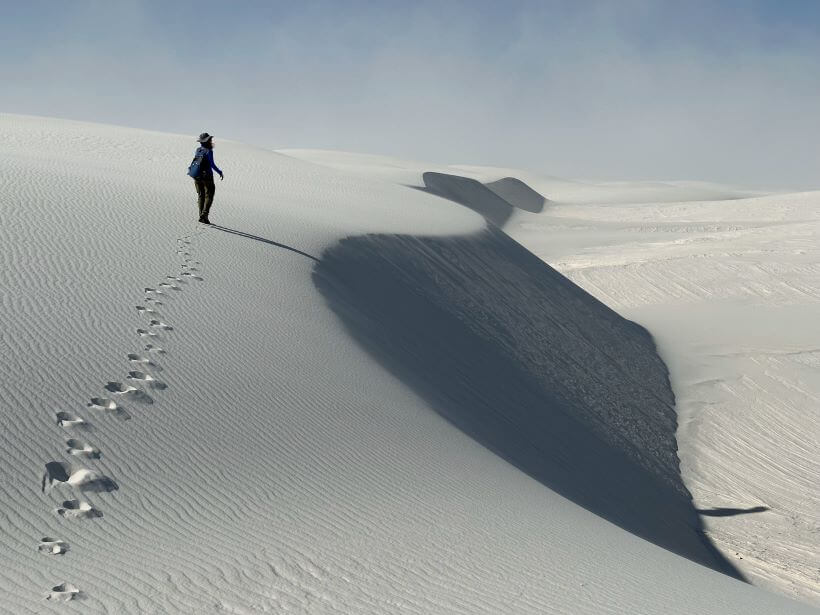
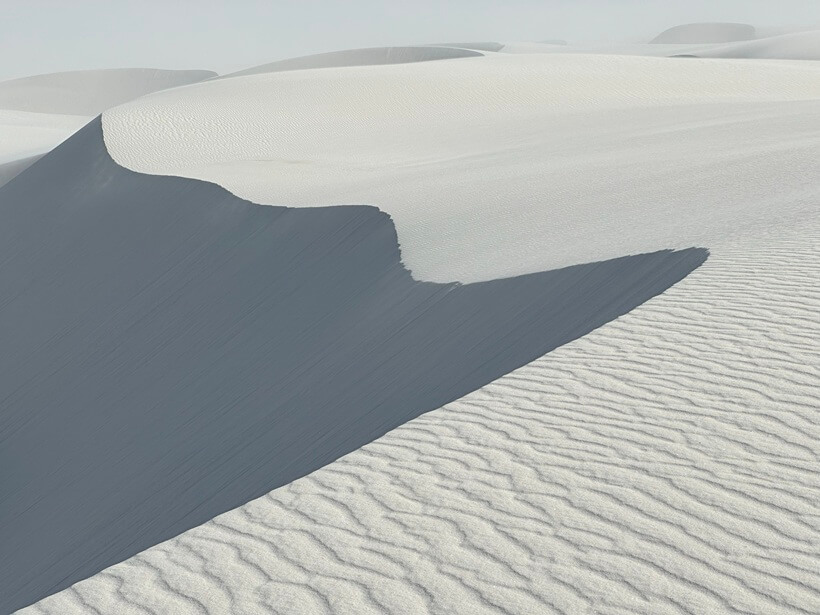
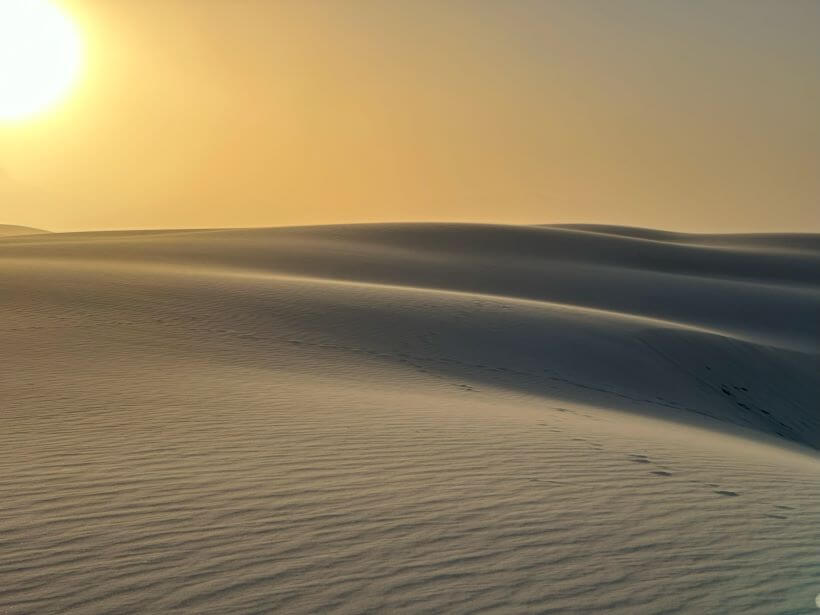
The wind picked up quickly and soon the bright blue skies turned a pale milky hue, and the horizon blurred into a foggy whiteness. The tiny sand crystals were scratching our skin and made it hard to see. We managed to stay until sunset, and despite the low visibility, it was still a mesmerizing sight!
It’s not uncommon for strong winds to suddenly appear in the winter months and even spring, so we were extremely lucky to have had the chance to visit the park before it closed down for the next few days. We barely missed it by a few hours!
We left New Mexico the next day, but not before a stop at McGinn’s PistachioLand farm, right next to the White Sands desert. It was too early for tours, but at least we got to sample some crazy good flavored nuts, and of course their homemade pistachio ice cream. You can recognize the farm from afar, by the giant pistachio statue by the road.